Exit Signs and Emergency Lighting: A Complete Guide
Exit signs and emergency lighting are two of the most important safety systems in any building. When mains power fails, they keep escape routes visible and guide occupants to safety.
Whether you are a facility manager, an electrical contractor or a building owner, understanding how these systems work is essential for code compliance and occupant safety.
In this guide, we cover the types of emergency exit lights, centralized emergency lighting systems, safety requirements, and practical tips for choosing the right equipment.
What Are Exit Signs and Emergency Lighting?
Exit signs and emergency lighting form the emergency egress system of a building. Exit signs identify exit doors and routes, while emergency lighting provides illumination when normal lighting fails.
Emergency lighting includes a range of fixtures: emergency exit lights above doors, illuminated escape route markers, and general emergency luminaires that light corridors and stairwells.
These systems can be self-contained, with a battery built into each fitting, or centralized, where a central power supply feeds all fixtures. Centralized emergency lighting systems are increasingly preferred in larger buildings because they are easier to test and maintain from one location.
Why Exit Signs and Emergency Lighting Matter
During a power failure or fire, panic can set in quickly. Visible exit signs and reliable emergency lighting reduce confusion and help people reach safety calmly and quickly.
- Guide occupants along escape routes in darkness
- Mark exit doors clearly in all conditions
- Support safe evacuation during fires and power outages
- Meet building safety codes and insurance requirements
Regular testing is just as important as installation. A system that is not tested can fail exactly when it is needed most.
Types of Emergency Exit Lights
Emergency exit lights come in several forms, each suited to a different part of the escape route:
- Exit signs: illuminated signs above exit doors, with letters, arrows or pictograms.
- Emergency exit lighting fixtures: luminaires that switch on automatically when normal power is lost.
- Combination units: an exit sign and emergency light in a single fixture.
- Maintained vs non-maintained: maintained fittings stay lit at all times; non-maintained fittings only light up during an emergency.
Centralized Emergency Lighting Systems
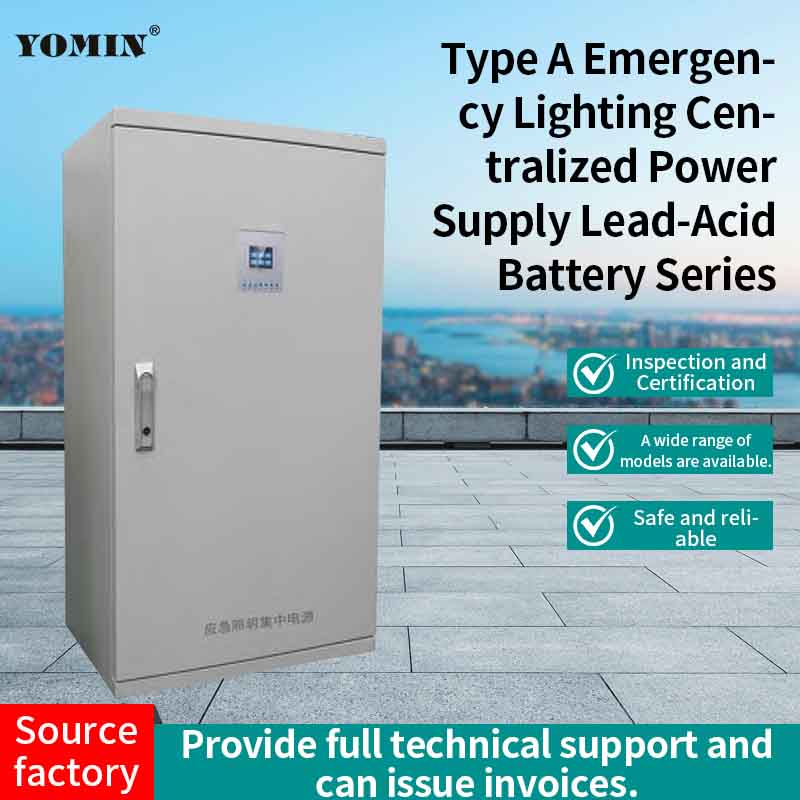
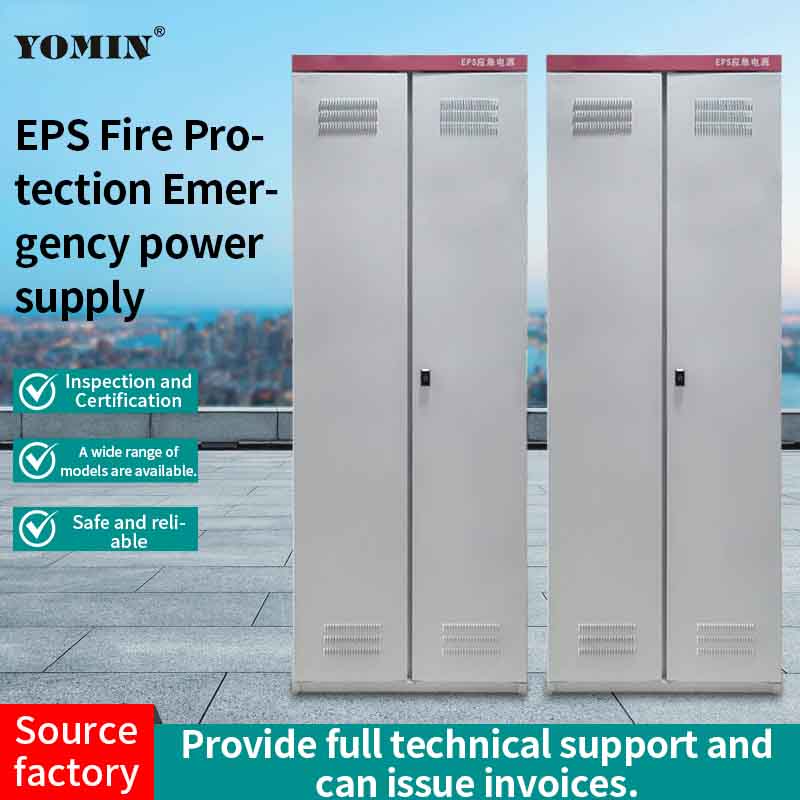
In a centralized system, a central battery cabinet or EPS (emergency power supply) unit powers all the emergency exit lights and fixtures in the building.
Yomin Electric manufactures Type A centralized emergency lighting power supplies with both lead-acid and lithium iron phosphate (LiFePO4) battery series. These cabinets provide safe low-voltage DC output to emergency lighting circuits and automatically switch on when mains power fails.
Centralized systems offer real advantages: batteries are installed in one safe location, testing is done from a single controller, and each fixture is simpler and cheaper because it contains no battery of its own.
Emergency Exit Lighting Requirements
Most countries regulate emergency lighting through national standards such as EN 1838 in Europe, NFPA 101 in North America, and GB 17945 in China. Common requirements include:
- Minimum illumination levels on escape routes (typically 1 lux or higher)
- Minimum operating duration of 90 minutes (up to 3 hours in some codes)
- Exit signs visible from the required distance
- Automatic activation within seconds of power failure
- Monthly function tests and annual duration tests
How to Choose Emergency Exit Lights
Choosing the right emergency exit lights depends on the building type, the escape routes, and the local code. Start by deciding between self-contained and centralized systems, then consider:
- Power source: battery capacity and expected operating duration.
- Light output: enough lumens to meet the required lux level.
- IP rating: dust and water protection for the installation environment.
- Mounting: surface, recessed or ceiling mounted fittings.
- Testing: whether the system supports automatic self-testing.
Frequently Asked Questions about Exit Signs and Emergency Lighting
What is the difference between exit signs and emergency lighting?
Exit signs mark the path to safety exits, while emergency lighting illuminates escape routes and areas when normal power fails.
How long should emergency exit lights stay on?
Most building codes require emergency exit lighting to operate for at least 90 minutes after mains power failure.
What is a centralized emergency lighting system?
A centralized system powers multiple emergency lighting fixtures from a single central battery or EPS unit.
Are emergency exit lights required in commercial buildings?
Yes. Occupied commercial, industrial and public buildings are generally required to have exit signs and emergency lighting along escape routes.
Conclusion and Key Takeaways
Exit signs and emergency lighting are not optional extras; they are life-safety systems that every building needs. A well-designed system combines the right fixtures with a reliable power source and a regular testing schedule.
- Exit signs and emergency lighting work together to make escape routes safe.
- Centralized emergency lighting systems are easier to maintain in larger buildings.
- Always follow the local standards for illumination, duration and testing.
- Test the system regularly so it works when it matters most.
Yomin Electric supplies centralized emergency lighting power supplies, EPS cabinets and controllers for projects worldwide. Contact our team for guidance on your emergency lighting requirements.
Need Help with Your Emergency Lighting Project?
Our team supplies reliable electrical switching and protection components for industrial and commercial projects.
Request a Quote →