How Are Current Transformers Used in Protection Systems for Power Distribution?
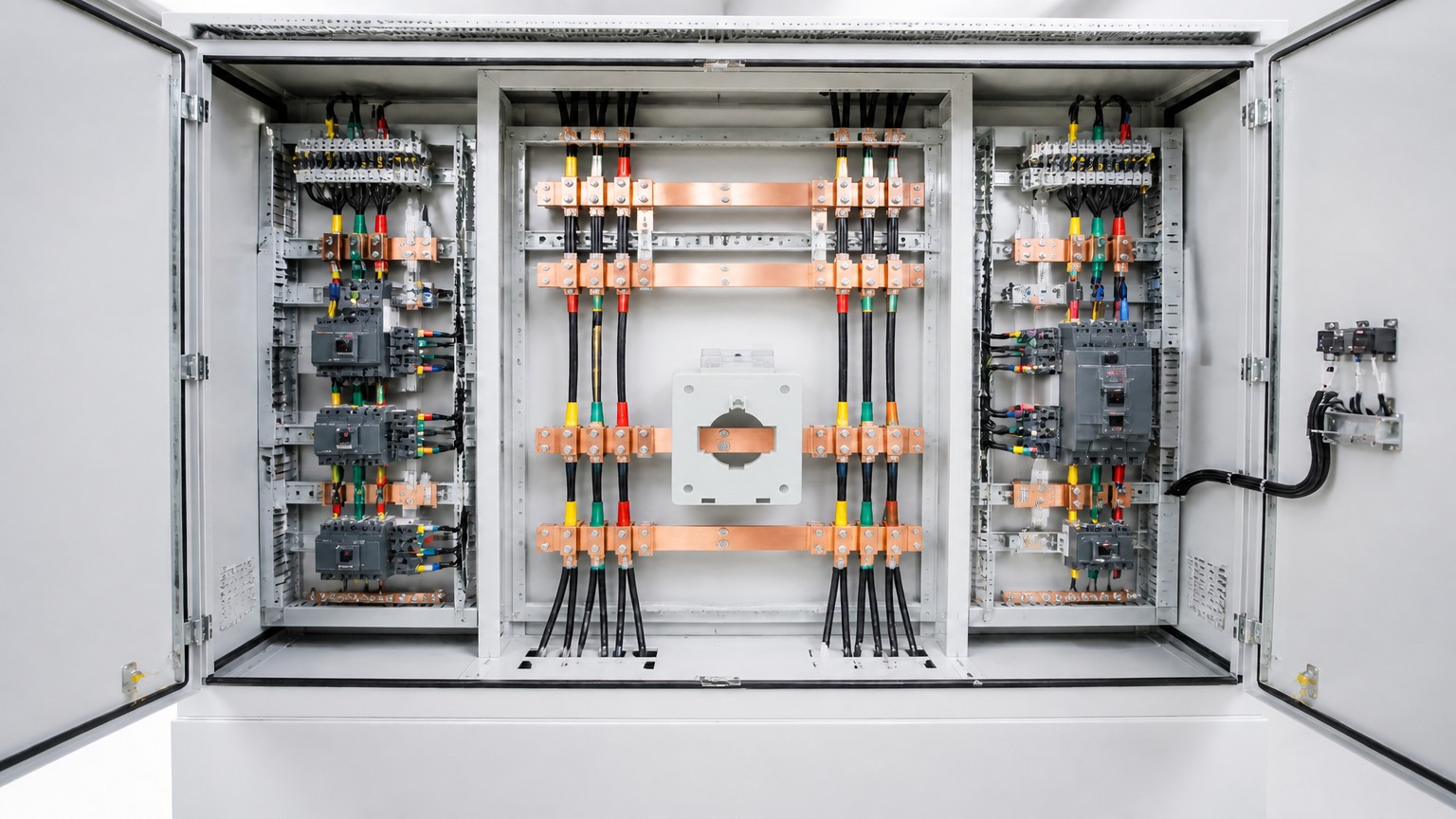
Current transformers (CTs) are the primary sensing interfaces between high-current power circuits and the low-voltage protection and metering equipment used in distribution networks. In power distribution, CTs feed relays and protection devices with a proportional, safe current signal so that faults can be detected, isolated, and cleared before they damage equipment or cause outages.
The role of CTs in distribution protection
A protection CT steps down the large primary current — hundreds to thousands of amps — to a secondary current (5 A or 1 A) that relays can process. When a fault occurs, the relay compares the measured current against its setting. If the current exceeds the threshold, the relay trips the breaker and isolates the faulty section.
Protection CT classes: what 5P10 and 10P10 mean
Protection CTs are rated by their accuracy limit factor. A 5P10 CT maintains its accuracy up to 10 times its rated current before saturation. The higher the limit factor, the longer the CT stays accurate during a fault — essential for relays that must distinguish between overloads and short circuits.
- 5P10 / 10P10 — standard protection classes for overcurrent and earth-fault relays.
- Class PX / TP — high-performance classes for differential and distance protection.
Metering CTs vs protection CTs
| Property | Metering CT | Protection CT |
|---|---|---|
| Priority | Accuracy at normal load | Accuracy during faults |
| Saturation | Deliberate at high current (protects meters) | Delayed as long as possible |
| Typical class | 0.5, 1.0 | 5P10, 10P10, PX |
Where CT-based protection is applied
- Main incomer feeders in LV and MV distribution boards.
- Overcurrent and earth-fault protection on transformers and motors.
- Differential protection of transformers and busbars.
- Generator and feeder protection in industrial plants.
Why CT accuracy matters for reliability
An undersized or wrongly classed CT can saturate during a fault, delivering a low signal when the relay needs the highest accuracy. The result may be a relay that trips too late — or not at all. Correct CT selection is therefore a core part of protection coordination studies.
FAQ
Can a metering CT be used for protection?
Generally no. Metering CTs saturate at high currents by design, which would blind the protection relay during a fault.
What is the accuracy limit factor?
It is the multiple of rated current at which the CT still meets its accuracy specification — e.g., 5P10 means accurate up to 10 times rated current.
How do CTs help prevent outages?
By feeding relays that isolate faults quickly, CTs limit damage and keep the rest of the distribution network in service.
Final Thoughts
Current transformers are the eyes of every protection system in power distribution. Choosing the correct ratio, class, and saturation performance keeps people safe and networks online. Yomin Electric’s current transformer range covers metering and protection applications across LV distribution.
Need Help Choosing the Right Product?
Our engineers can recommend the exact model, rating and configuration for your project. Tell us your requirements and get a factory-direct quote within 24 hours.