How to Select the Right Current Transformer for Electrical Measurement
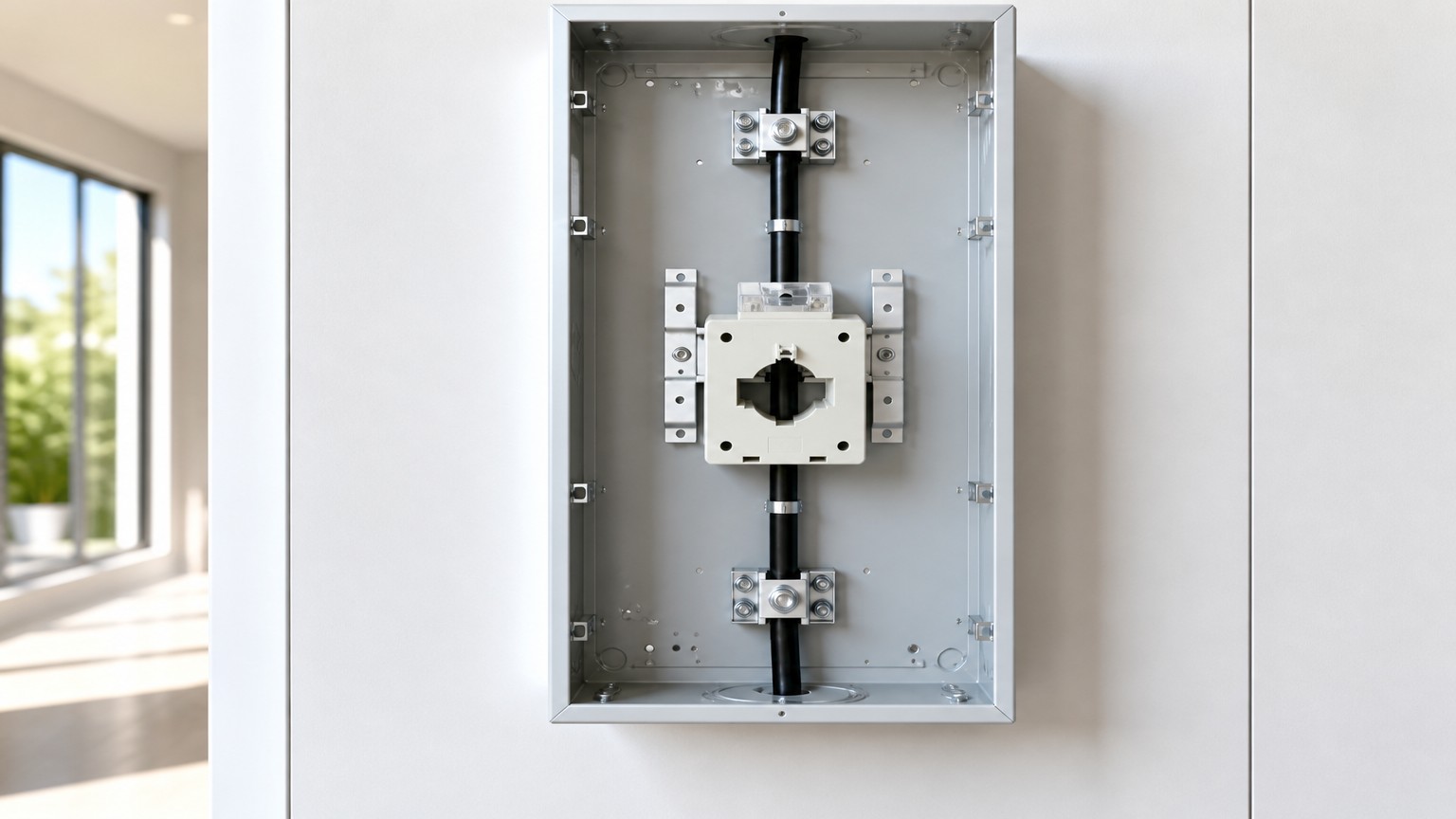
Selecting the right current transformer (CT) is a critical step in designing reliable electrical measurement and protection systems. A properly specified CT converts high primary currents into a safe, standard secondary current — usually 5 A or 1 A — that meters and relays can handle. Choosing the wrong ratio, class, or burden can corrupt readings and compromise protection.
Step 1: Determine the primary current
Select a primary rating that matches the maximum expected load, ideally at 60-80% of the CT rating for metering accuracy. A CT rated too high gives poor accuracy at low loads; one rated too low saturates and distorts measurement.
Step 2: Choose the secondary rating
The standard secondary is 5 A, with 1 A used for long cable runs where secondary burden must be minimized. Confirm the meter or relay input matches the CT secondary.
Step 3: Match the accuracy class
| Class | Application |
|---|---|
| 0.5 / 0.5S | Utility and high-accuracy billing metering |
| 1.0 | General commercial metering |
| 5P10 / 10P10 | Protection relays (accuracy limit factor) |
Metering CTs prioritize accuracy; protection CTs prioritize saturation performance during faults. Choose the class that matches the device you are feeding.
Step 4: Check the burden
The burden is the total impedance of the connected devices and wiring, expressed in VA. The CT’s rated burden must be equal to or greater than the connected burden; oversized CT burden reduces accuracy, while undersized burden risks saturation.
Step 5: Select the physical form
- Solid core CT — highest accuracy, installed on a de-energized cable or busbar.
- Split core CT — clamps around an existing cable without disconnection; ideal for retrofits.
- Rogowski coil — flexible, non-saturating, for large or irregular conductors.
Step 6: Verify wiring and safety
The secondary of a current transformer must never be opened while primary current flows — this creates dangerous voltages. Terminals must be shorted before any disconnection, and CTs must be grounded as specified.
FAQ
What CT size do I need for a 400 A supply?
Typically 400/5 A or 500/5 A with class 1.0 or 0.5 depending on the metering accuracy required.
Can I use one CT for metering and protection?
Yes, but the CT class must satisfy the stricter requirement, and separate cores are often preferred.
Do I need a CT if the load is under 100 A?
Direct-connected meters handle currents up to about 100 A; above that, CT-operated metering is the standard approach.
Final Thoughts
Correct CT selection protects both your people and your data. Yomin Electric offers split-core and solid-core current transformers plus CT-operated energy meters for accurate, safe measurement.
Need Help Choosing the Right Product?
Our engineers can recommend the exact model, rating and configuration for your project. Tell us your requirements and get a factory-direct quote within 24 hours.