Maximizing Efficiency: Choosing Solar Batteries
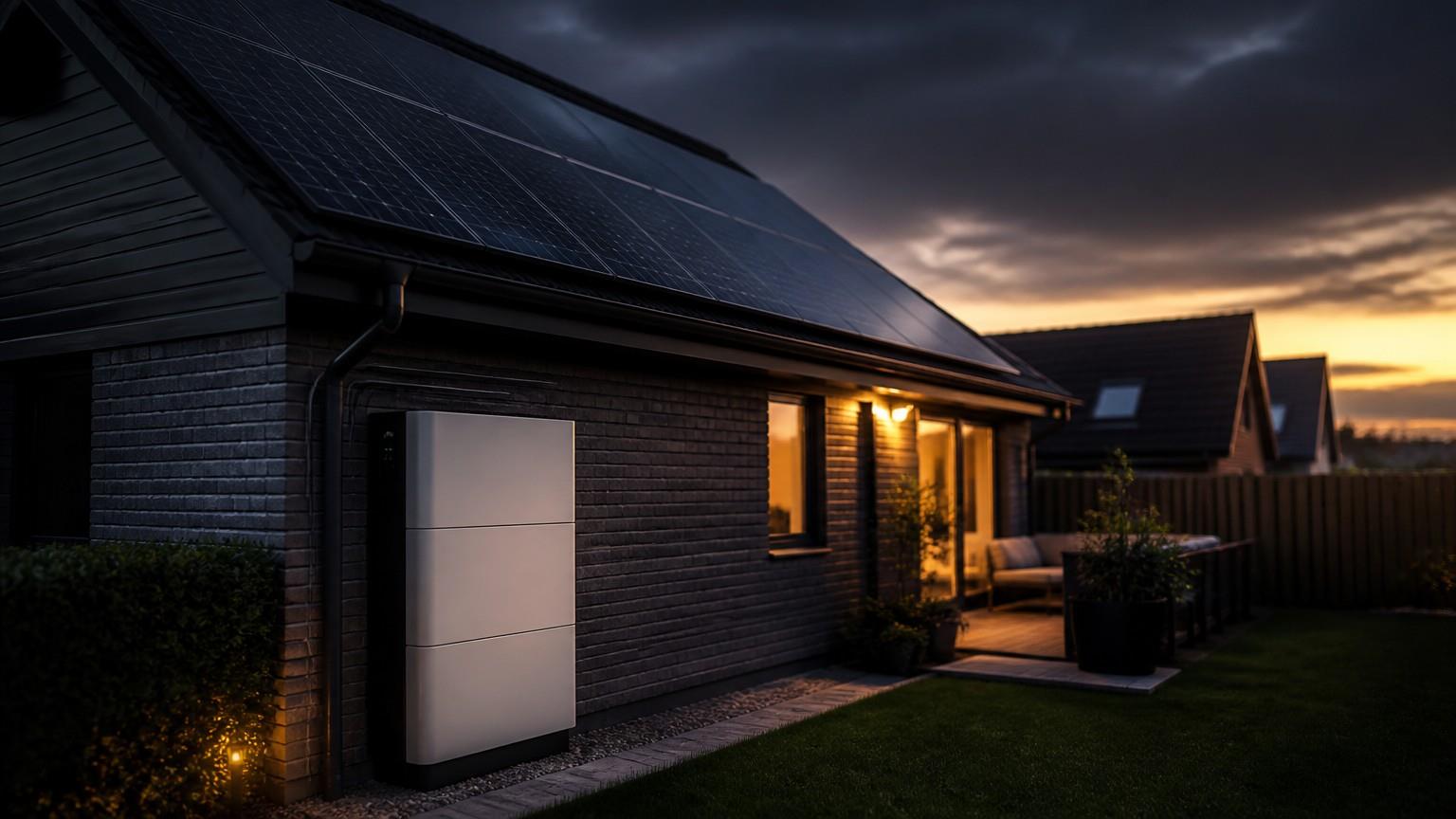
Solar batteries help you store daytime solar production so you can use it later, reduce grid dependence, and keep essential devices running when sunlight is low. Choosing the right system means matching battery type, capacity, voltage, charging method, and monitoring equipment to your actual energy use. This guide explains how solar power batteries work, what to compare before buying, and how energy meters or voltage regulators can help you get more reliable performance from your solar energy solutions.
What should you look for when choosing solar batteries?
The best solar batteries are the ones that fit your load, charging source, installation space, and budget without being oversized or underprotected. Start by deciding what you need to power, how long you need backup energy, and whether the battery will support a small lighting setup, an off-grid cabin, a mobile system, or a larger home energy storage plan.
A good buying decision usually comes down to four practical questions: how much energy you need to store, how quickly the battery can charge, how safely it integrates with your inverter and panels, and how easy it is to monitor. If any of those pieces are ignored, the system may still work, but it can waste solar production, shorten battery life, or fail to deliver power when you need it most.
For commercial and residential buyers, the smartest approach is to think beyond the battery itself. Solar panel batteries perform best when paired with the right charge controller, voltage regulation, and usage monitoring. Before you finalize your setup, explore our product page for energy meters and voltage regulators to help protect your investment, track performance, and keep your solar energy storage system operating efficiently.
Solar battery basics that shape performance
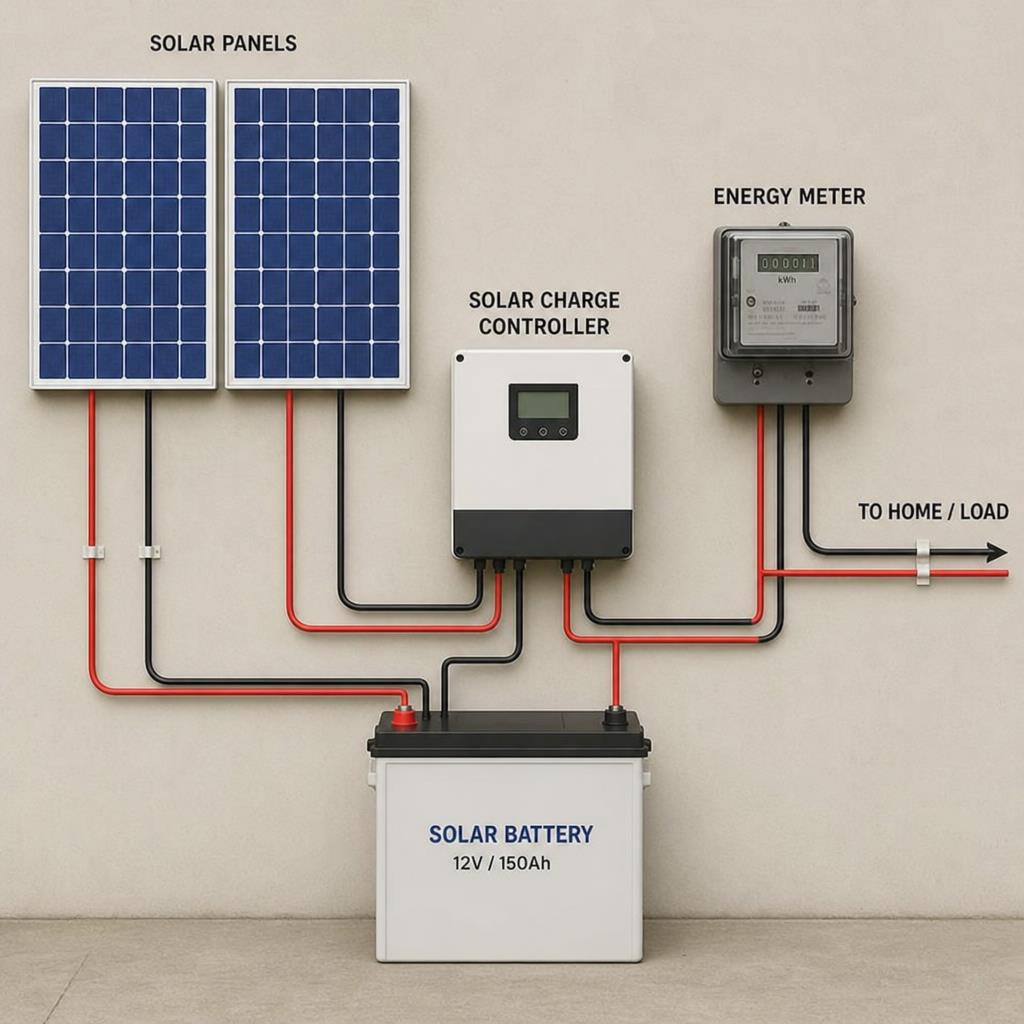
Solar batteries store electrical energy generated by solar panels. During the day, panels convert sunlight into electricity, and a charge controller manages the process of charging batteries solar safely. Stored energy can then power lights, appliances, electronics, pumps, tools, or backup circuits depending on system size.
The battery is only one part of the system. Solar panels generate power, the charge controller manages charging, the inverter converts DC power to AC power when needed, and monitoring equipment helps you understand production and consumption. When these parts are matched correctly, the whole system works with less strain and fewer surprises.
For small setups, solar rechargeable batteries for solar lights may be enough. For larger applications, buyers often compare lithium, AGM, gel, or flooded lead-acid batteries. Each chemistry has different expectations for maintenance, usable capacity, cycle life, charging speed, and installation conditions.
Main types of solar power batteries
Battery chemistry affects cost, lifespan, weight, maintenance, and how deeply the battery can be discharged. No single option is best for every use case, so the right choice depends on how the system will be used.
Lithium batteries
Lithium batteries are popular for modern solar energy storage because they are compact, efficient, and typically allow deeper discharge than many lead-acid options. Many buyers looking at home or commercial backup systems compare lithium solar batteries 5-20kWh 48V because that range can support meaningful storage without requiring a large battery room.
Lithium batteries usually pair well with advanced battery management systems, which help protect against unsafe voltage, temperature, and current conditions. They can be a strong choice when space is limited, daily cycling is expected, or long-term efficiency matters.
Lead-acid batteries
Lead-acid batteries remain common because they are familiar and often have a lower upfront cost. Flooded lead-acid models require maintenance and ventilation, while sealed AGM and gel batteries are more convenient for many users.
The tradeoff is that lead-acid batteries are generally more sensitive to deep discharge and improper charging. If they are repeatedly drained too far or left undercharged, their useful life can fall quickly.
Small rechargeable batteries for solar lights
Garden lights, pathway lights, and small decorative fixtures often use AA batteries for solar lights or similar rechargeable cells. These are not the same as larger solar panel batteries used for home backup, but the same principle applies: sunlight charges the battery during the day, and the stored energy powers the light at night.
When replacing these cells, look for solar rechargeable batteries for solar lights rather than single-use alkaline batteries. The correct rechargeable chemistry and size help the light charge properly and avoid poor nighttime performance.
How much solar energy storage do you need?
You need enough solar energy storage to run your chosen loads for the amount of time you expect, while leaving a safety margin for cloudy weather, battery aging, and real-world inefficiency. A battery that is too small will cycle deeply and wear faster, while a battery that is too large may cost more than necessary and may not charge fully from your panels.
A practical sizing process starts with your essential loads. List the devices you want to run, estimate how many watts each one uses, and multiply by the number of hours per day you expect to use it. That gives you a rough daily watt-hour requirement.
Use this simple checklist before choosing capacity:
- Identify essential loads first, such as lighting, refrigeration, communications, security equipment, or medical devices.
- Separate must-have backup loads from comfort loads, such as entertainment systems or noncritical appliances.
- Estimate daily energy use in watt-hours instead of guessing from appliance size alone.
- Decide whether you need one night of backup, multiple days of backup, or just evening power after sunset.
- Check whether your solar panels can recharge the battery within the available sunlight window.
- Add margin for cloudy weather, seasonal changes, inverter losses, and battery aging.
For example, a small shed or lighting system may only need modest storage. A home backup system, workshop, or off-grid setup may require a larger battery bank and more careful load planning. Commercial sites may also benefit from energy meters that show when power is used most heavily, allowing the battery system to be designed around real demand rather than assumptions.
Matching batteries with panels, controllers, and voltage
The battery must be compatible with the rest of your solar equipment. Voltage is especially important because panels, charge controllers, inverters, and batteries all need to operate within acceptable ranges. A mismatch can reduce charging efficiency, trigger shutdowns, or damage components.
Common system voltages include 12V, 24V, and 48V. Small portable or lighting systems often use lower voltages, while larger storage systems frequently move toward 48V because it can handle higher power with lower current. That is one reason buyers researching lithium solar batteries 5-20kWh 48V are often planning more serious backup or off-grid systems.
Voltage regulators help stabilize output and protect connected equipment from fluctuations. Energy meters add visibility, showing how much power is being produced, stored, and consumed. If your goal is maximizing efficiency, these supporting products are not accessories; they are part of a well-controlled system.
Charging batteries solar the right way
Charging batteries solar is not just a matter of connecting panels to a battery. The battery needs controlled charging that matches its chemistry, voltage, and capacity. A charge controller prevents overcharging, manages current, and helps ensure that the battery receives the correct charging profile.
There are two common controller categories: PWM and MPPT. PWM controllers are often used in simpler systems, while MPPT controllers can improve energy harvest in many panel and weather conditions. The best choice depends on system size, panel voltage, budget, and performance expectations.
Good charging habits include:
- Use a charge controller designed for your battery chemistry.
- Confirm that panel voltage and current stay within controller limits.
- Avoid repeated deep discharge unless the battery is rated for it.
- Keep battery terminals clean, tight, and protected from corrosion.
- Monitor temperature if the battery is installed in a hot or cold environment.
- Review energy meter data regularly to spot unusual consumption or weak charging.
For small solar lights, the process is simpler but still important. Replace weak cells with the correct rechargeable type, place the light where the panel receives direct sunlight, and clean the mini panel so it can charge effectively.
How long do solar batteries last?
Solar battery lifespan depends on chemistry, depth of discharge, temperature, charging quality, maintenance, and cycle frequency. In general, a battery that is properly sized, correctly charged, and protected from harsh conditions will last longer than one that is repeatedly overworked or poorly regulated.
Lithium batteries are often chosen for longer cycle life and deeper usable capacity, while lead-acid batteries may require more conservative discharge limits and more maintenance. Small AA batteries for solar lights have a much smaller role and are usually replaced more often than large solar storage batteries.
To extend battery life, focus on the causes of premature wear:
- Avoid draining the battery below its recommended limit.
- Do not leave batteries sitting discharged for long periods.
- Use proper charging equipment for the battery type.
- Keep batteries within recommended temperature ranges.
- Protect outdoor systems from moisture and physical damage.
- Use voltage regulation to reduce stress on connected equipment.
- Track performance with an energy meter so declining capacity is easier to notice.
The question “how long do solar batteries last” has no single answer because usage conditions vary so widely. A lightly cycled, well-managed system can perform very differently from one exposed to heat, heavy daily loads, and improper charging.
Commercial buying considerations
For businesses, contractors, property owners, and serious DIY buyers, solar batteries should be evaluated as part of a broader energy strategy. The lowest upfront battery price is not always the most efficient choice if it leads to more maintenance, lower usable capacity, or poor system visibility.
Consider the commercial value of reliability. If the battery supports security systems, refrigeration, communications, lighting, or production equipment, downtime can matter more than small savings on equipment. In that situation, solar energy solutions should include batteries, charge control, voltage regulation, and monitoring from the beginning.
Before purchasing, ask suppliers or installers about:
- Battery chemistry and recommended use case.
- Usable capacity, not just total rated capacity.
- Compatible inverter and charge controller requirements.
- Installation location, ventilation, and temperature limits.
- Monitoring options for production, consumption, and battery status.
- Maintenance expectations and replacement planning.
- Safety protections built into the battery or required externally.
This is also where energy meters and voltage regulators become especially useful. An energy meter can reveal whether loads are larger than expected, while a voltage regulator can help protect sensitive electronics. Together, they make the battery system easier to manage and easier to justify as a long-term investment.
Common mistakes that reduce efficiency
Many solar battery problems come from sizing, compatibility, or monitoring mistakes rather than from the battery alone. Avoiding these issues can improve performance before you spend more money on extra capacity.
Watch for these common problems:
- Buying batteries before calculating daily energy use.
- Mixing old and new batteries in the same bank without proper guidance.
- Choosing batteries that do not match the inverter or controller voltage.
- Using non-rechargeable batteries in solar lights.
- Placing solar lights where panels are shaded most of the day.
- Ignoring temperature, moisture, and ventilation needs.
- Skipping meters and then guessing why performance is poor.
Efficiency is easiest to protect when the system is planned as a whole. Battery capacity, solar array size, charge controller settings, voltage stability, and load behavior all work together.
A practical path to a better solar battery setup
Start with your energy goals, then choose the battery and supporting equipment that make those goals realistic. If you only need pathway lighting, focus on quality solar rechargeable batteries for solar lights and good sun exposure. If you need backup power or off-grid performance, compare solar batteries by usable capacity, chemistry, voltage, charge compatibility, and monitoring options.
For the most efficient setup, do not stop at the battery. Add the tools that help you control and understand the system. Visit our energy meters and voltage regulators product page to find components that support safer charging, steadier voltage, and clearer performance tracking for your solar power batteries.
With the right combination of solar panel batteries, controls, and monitoring, solar energy storage becomes more predictable, more efficient, and easier to scale as your energy needs grow.
Need Help Choosing the Right Product?
Our engineers can recommend the exact model, rating and configuration for your project. Tell us your requirements and get a factory-direct quote within 24 hours.