Power Distribution System: What It Is and the Different Types
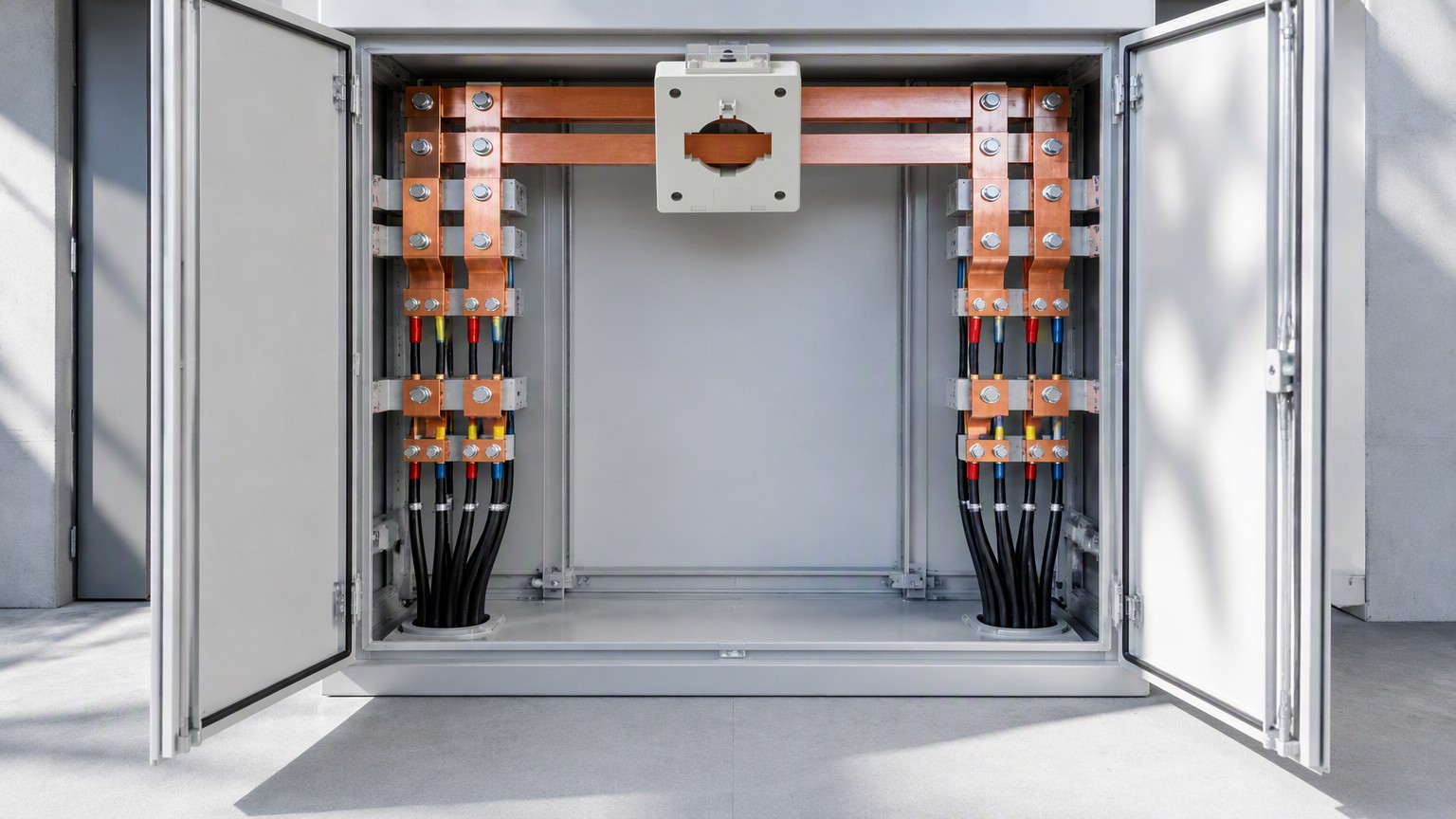
A power distribution system is the network that carries electricity from transmission substations to homes, businesses, and industrial facilities. It is the final stage of the electricity supply chain, and its design determines how reliably, safely, and efficiently power reaches every consumer.
What is a power distribution system?
Power distribution begins where transmission ends: at distribution substations that step voltage down to levels suitable for local use (commonly 11 kV, 400 V, and 230 V). From there, distribution lines and underground cables feed transformers, switchgear, protection devices, and service lines that deliver power to individual customers.
Main components
- Distribution substations — step voltage down from transmission levels.
- Distribution lines — overhead or underground feeders.
- Distribution transformers — final voltage step-down.
- Switchgear and protection — breakers, fuses, relays, and current transformers for fault detection.
- Metering — energy meters at customer and substation points.
The different types of distribution systems
Radial system
The simplest and cheapest: one path from the substation to each load. If a fault occurs on the feeder, all downstream customers lose supply. Used widely in rural and simple urban networks.
Ring (loop) system
Feeders form a loop so each load can be supplied from two directions. A fault can be isolated while the rest of the loop stays energized — higher reliability at moderate cost.
Mesh (network) system
Multiple interconnections feed every load from several directions. Highest reliability and voltage stability, used in dense urban areas and critical facilities, at the highest cost.
AC vs DC distribution
Most distribution is AC because transformers make voltage conversion easy. DC distribution is growing in data centers, solar microgrids, and EV charging hubs where sources and loads are naturally DC.
Why current transformers matter in distribution
Current transformers are the sensing backbone of distribution protection and metering: they step high currents down to safe levels for relays and meters, detect overloads and faults, and feed the measurements that keep the network reliable. Choosing the correct ratio and class is essential.
FAQ
What is the difference between transmission and distribution?
Transmission moves bulk power over long distances at high voltage; distribution delivers it locally at lower voltage.
Which distribution type is most reliable?
Mesh systems offer the highest reliability; radial systems the lowest but also the lowest cost.
Why do I need CTs in a distribution board?
CTs enable safe, accurate measurement and protection at high currents — they are essential for metering and relay protection.
Final Thoughts
A well-designed power distribution system balances cost, reliability, and safety. Whatever the network type, accurate sensing and metering keep it running — Yomin Electric’s current transformers and energy meters cover distribution measurement and protection needs.
Need Help Choosing the Right Product?
Our engineers can recommend the exact model, rating and configuration for your project. Tell us your requirements and get a factory-direct quote within 24 hours.