Power Meter vs Power Analyzer: Understanding the Key Differences
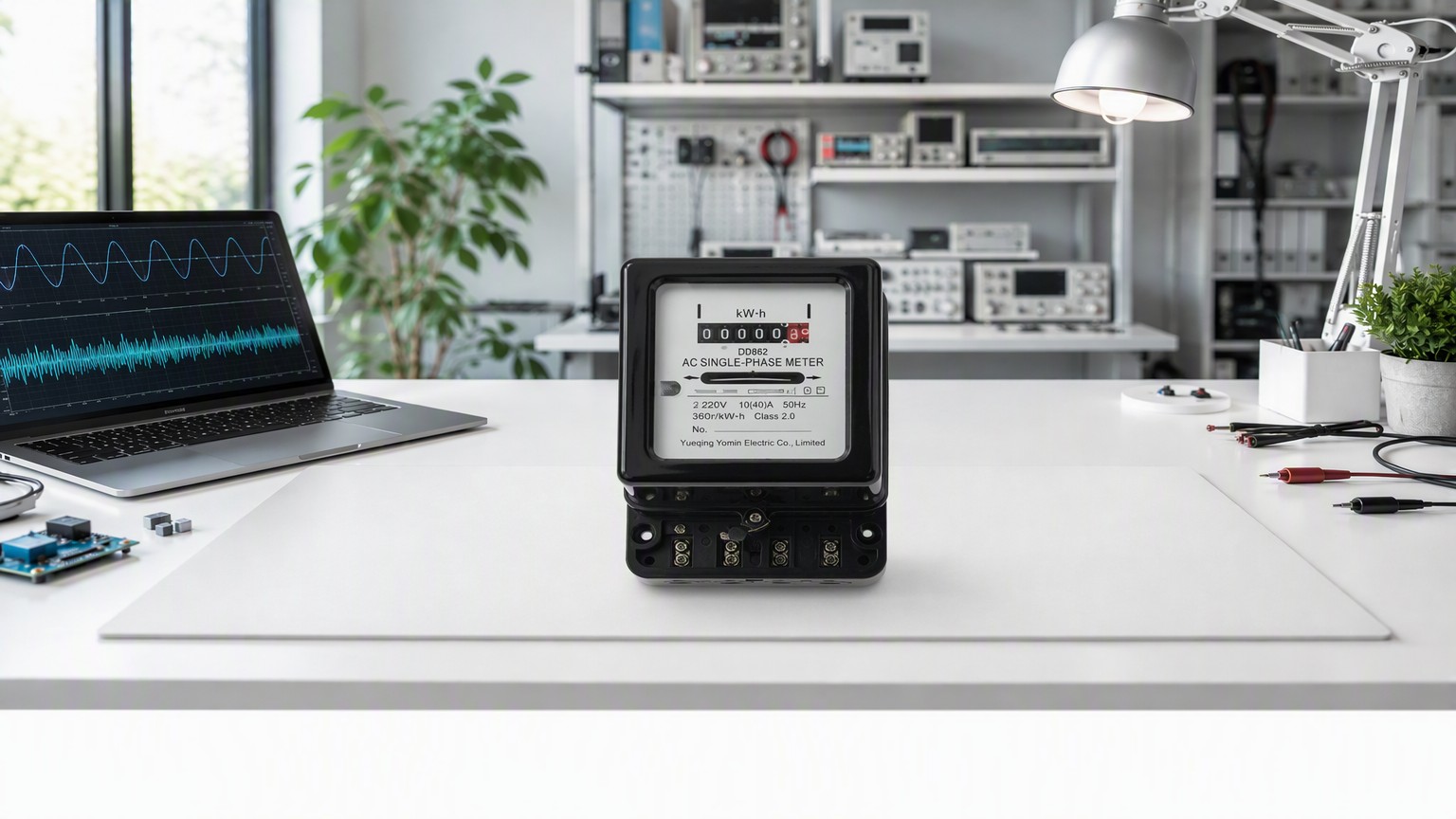
Power meter and power analyzer are two terms that are often used interchangeably, but they describe different instruments with different jobs. A power meter measures energy consumption for billing and monitoring; a power analyzer measures the quality and behavior of the electrical power itself. Choosing the right one depends on whether you need a billing record or a diagnostic analysis.
What is a power meter?
A power meter (energy meter or kWh meter) measures the amount of electrical energy consumed over time, in kilowatt-hours. It is the instrument behind utility bills, submetering, and basic consumption tracking. Power meters are accurate, certified, and designed for long-term, continuous operation.
What is a power analyzer?
A power analyzer measures a much wider set of electrical parameters, including voltage and current waveforms, active/reactive/apparent power, power factor, frequency, harmonics, and total harmonic distortion (THD). It is a diagnostic tool used for energy audits, power quality studies, and equipment efficiency testing.
Key differences
| Feature | Power meter | Power analyzer |
|---|---|---|
| Primary output | Energy (kWh), registers | Full electrical parameter set |
| Main purpose | Billing and monitoring | Analysis and troubleshooting |
| Harmonics / THD | Usually not included | Included |
| Certification | Billing-grade (MID, IEC) | Engineering-grade |
| Installation | Permanent, in panel | Permanent or portable |
| Best for | Bills, submetering, dashboards | Audits, fault finding, efficiency tests |
When to use a power meter
- Billing tenants, units, or departments.
- Tracking household or facility consumption.
- Feeding dashboards and energy management systems.
- Solar export/import metering.
When to use a power analyzer
- Investigating voltage dips, flicker, or unexplained trips.
- Measuring harmonics from drives and non-linear loads.
- Verifying efficiency improvements with before/after data.
- Validating power factor and correction equipment.
Can they work together?
Yes — in practice they complement each other. A power meter gives the continuous billing record; a power analyzer gives the periodic deep analysis. Both rely on accurate current sensing, so pair them with quality current transformers for high-current circuits.
FAQ
Can a power analyzer replace a power meter for billing?
No. Billing requires a certified energy meter; analyzers are diagnostic instruments.
Does every facility need a power analyzer?
Only if you have power quality problems or efficiency projects to verify. Billing and monitoring work with power meters.
What is THD?
Total Harmonic Distortion — a measure of waveform distortion caused by non-linear loads such as drives and chargers.
Final Thoughts
The power meter tells you how much you used; the power analyzer tells you how well the power behaved. For most homes and businesses, a certified energy meter is the right foundation, with an analyzer used when problems appear.
Need Help Choosing the Right Product?
Our engineers can recommend the exact model, rating and configuration for your project. Tell us your requirements and get a factory-direct quote within 24 hours.