Static Charge Measurement Techniques

Static charge measurement helps teams find, judge, and control static buildup before it leads to defects, handling problems, nuisance shocks, or damage to sensitive parts. In most practical settings, this work relies on electrostatic testing equipment such as field meters, surface resistance meters, grounding testers, and related tools. This guide explains how measuring static electricity works, why the method matters, and how to choose a static charge measurement device for routine control.
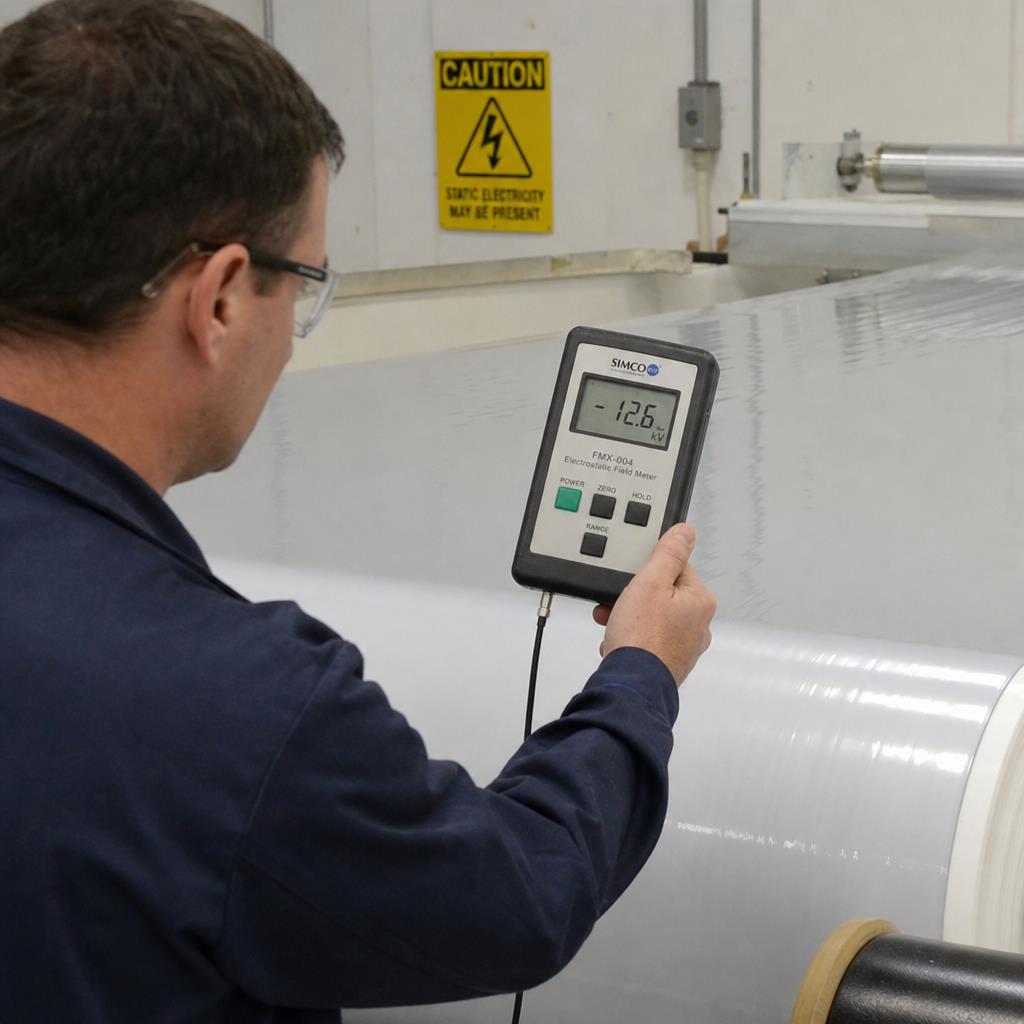
What is Static Charge Measurement?
Static charge measurement is the process of detecting and judging charge buildup on a surface, object, material, or process area. It is often used to see whether a material is building up charge, whether a control method is lowering that charge, and whether a workspace is safe for sensitive products or operators.
Unlike current in a powered circuit, static electricity can build on insulating materials, packaging films, textiles, plastics, work surfaces, tools, and people. The charge may not be visible, but it can affect dust attraction, handling, ESD, and quality. Static charge measurement gives teams a clear reference.
In practice, static electricity measurement can use different values. A field meter may show field strength and polarity. A surface resistance meter may show how easily charge can move across or through a material. A grounding tester may confirm whether people, benches, mats, or equipment have a path to ground.
Why Measuring Static Electricity Matters
Static problems change with material, humidity, motion, distance, grounding, and process conditions. A single shock or defect may be the last sign of a buildup that has been growing for a while.
Static charge measurement helps teams answer practical questions:
- Is a package holding charge after sealing?
- Is an ionizer lowering the field near a workstation?
- Is a textile web building charge as it moves through rollers?
- Is an electronics handling area staying within the control plan?
Without measurement, static control turns reactive and uneven.
Routine static electricity testing is especially important where products are sensitive, materials cling together, dust harms quality, or operators handle parts that may be damaged by ESD. Good measurements do not replace process discipline, but they help teams adjust controls, train workers, and check that equipment is still working as intended.
Static Field Meters
Static field meters detect the field from a charged surface or object without touching it. They are common because they allow quick, non-contact checks during production, inspection, troubleshooting, and static control verification.
A field meter shows how strong the field is, whether the polarity is positive or negative, and whether conditions change after controls are applied. That makes it useful for finding high-charge areas, comparing materials, checking process steps, and seeing whether static reduction methods work.
A static charge measurement meter is especially useful when contact could disturb the object, dirty the surface, or be hard to do. Films, packaging, plastic parts, and electronics can often be checked more safely at a fixed distance than by direct contact.
Key Features of Field Strength Meters
A useful field strength meter usually includes several features that support reliable static electricity measurement:
- Non-contact sensing: The meter reads the field from a set distance, helping protect sensitive surfaces and allowing quick checks of moving or delicate materials.
- Field strength reading: The displayed value gives a clear sign of the field at the measurement point. This reading is central to trend checks, troubleshooting, and control review.
- Polarity indication: Positive or negative polarity helps identify the charge type and can matter when checking ion balance or material behavior.
- Distance guidance: Many meters are built around a set measurement distance. Using that distance the same way each time helps readings stay comparable.
- Mobility: Handheld instruments let technicians move through production areas, packaging lines, benches, and inspection points.
These features turn a field meter from a simple detector into a practical static charge measurement device for daily use.
How Static Field Meters Work
Static field meters sense the electric field around a charged object without making contact with the surface. The charged object affects sensing parts inside the meter, and the tool turns that effect into a field strength reading, often with polarity info.
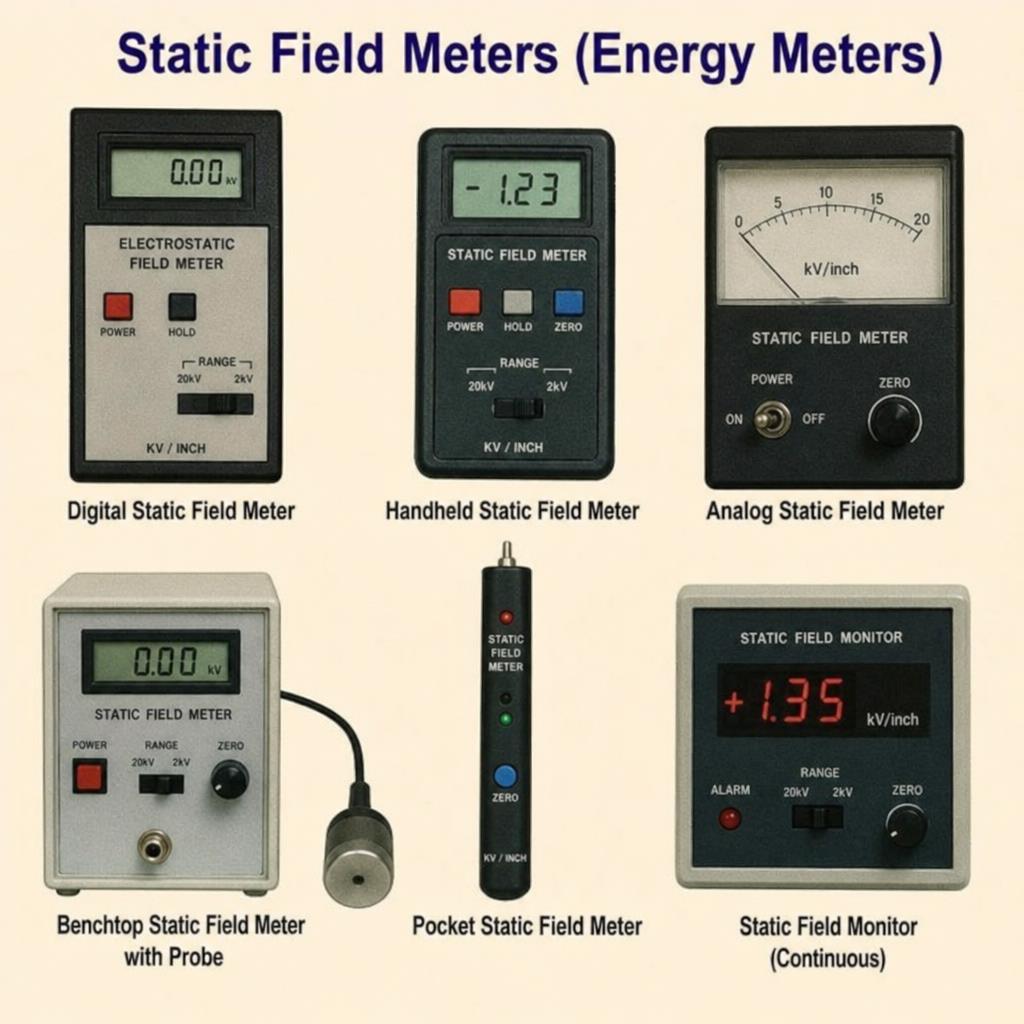
The non-contact method matters because touching a charged surface may change the charge. Contact can also create contamination, discharge the object, or give misleading results. By holding the meter at the suggested distance and angle, the user can measure the field while leaving the item as is.
Inside the meter, sensing parts react to the field from nearby charge. The meter’s electronics turn that reaction into a value that shows field strength at the meter’s location. Because the reading depends on sensor position, the same object can look different at a different distance, angle, or setting.
Basics of Static Field Measurement
Static field measurement depends on the interaction between a charged object and the meter’s sensing system. The stronger the charge and the closer the sensing part is to the source, the greater the effect on the reading, within design limits.
But the reading is not always a direct charge amount on the surface. Field meters respond to the field at one point in space. That field can shift with object shape, surface size, nearby grounded items, nearby charged materials, the operator’s body, fixtures, humidity, and air flow. This is why method and setting matter as much as the tool.
For accurate static field measurement, treat the reading as part of a set method, not as an isolated number. A repeatable method makes results easier to compare over time, across workstations, or before and after static control steps.
Practical techniques include:
- Use the suggested distance. Follow the instrument guide for spacing between the meter and the surface.
- Keep meter angle the same. Aim the sensor at the target area the same way each time unless the guide says otherwise.
- Measure the same spot each time. Small changes in position can matter, especially on uneven, small, or partly charged surfaces.
- Avoid nearby disturbance. Keep hands, grounded metal, charged packaging, cables, and other objects away from the sensing area where possible.
- Record conditions. Note material type, process step, humidity, distance, polarity, and control status.
- Compare trends, not just single readings. Repeated measurements often show more than one isolated value.
Field Meters Compared with Other Static Test Tools
Static testing tools are not the same. Each one answers a different question, and the wrong tool can lead to poor conclusions.
A static field meter answers: what field is present near this charged object or surface? It is best for non-contact checks of field strength and polarity. It helps find charge buildup, compare materials, and check the effect of ionizers, handling changes, or packaging choices.
A surface resistance meter answers: how resistive or dissipative is this material or surface? It usually uses contact probes or electrodes. This helps evaluate mats, work surfaces, flooring, packaging materials, garments, or other items meant to bleed off charge. It does not replace static charge measurement because resistance and field condition are related but not the same.
A grounding tester answers: does this person, workstation, tool, or piece of equipment have an acceptable path to ground? It is often used for wrist straps, footwear, mats, benches, and ground lines. Grounding helps charge dissipate, but a grounding tester does not measure the field on nearby insulators or packaging materials.
For a complete static control program, these tools often work together. Field meters show where charge exists, surface resistance meters help judge material behavior, and grounding testers confirm that conductive or dissipative paths are working.
Practical Uses of Static Field Measurement
Static field measurement is used in many production and quality settings because static can affect product performance and process stability.
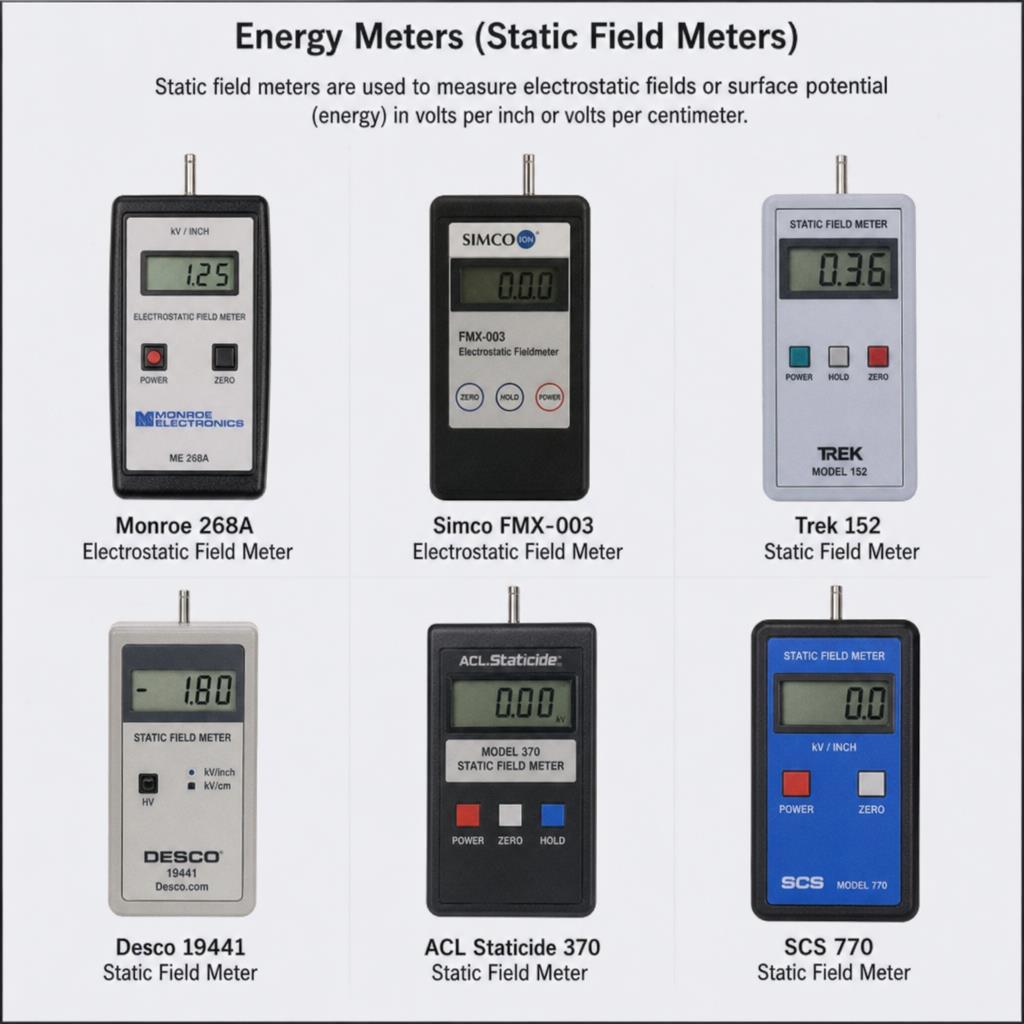
In electronics handling, field meters help spot charged packaging, trays, tools, garments, or work areas near sensitive components. Measuring before and after changes, such as adding an ionizer or changing handling steps, helps confirm whether the control measure lowers field levels.
In packaging, static electricity can cause films, labels, bags, and lightweight materials to cling, repel, attract dust, or behave unevenly during sealing and filling. A static charge measurement meter can help find the step where buildup starts and support choices about ionizers, material selection, or handling methods.
In textiles, moving fabrics can create static through friction, separation, drying, or contact with rollers. Static electricity testing helps quality teams watch charge behavior during processing, finishing, folding, or packing.
In quality control, routine measurements create a useful record of static conditions. This record can support troubleshooting, incoming material checks, process audits, and proof that static control equipment still works.
Using Field Strength Meters in Static Control Programs
Field strength meters help measure how well static control steps work by showing whether a condition changes after an action. For example, a team may measure a charged surface, turn on an ionizer, adjust its position, and measure again at the same distance and angle. If the method is steady, the before-and-after check becomes useful.
Routine measurement should be simple enough for regular use. A practical program can define check points, distances, operator steps, acceptable response actions, and record keeping needs. The goal is not to collect numbers for their own sake, but to spot drift, confirm control performance, and catch static issues before they affect output.
Accurate readings also help broader facility control. In some settings, static field meters may be used with electrical monitoring and power conditioning tools to keep operating conditions stable. Where it fits, teams may review static control with related equipment such as a current transformer, voltage stabilizer regulator, or energy meter to better understand electrical behavior in the system.
Common Myths About Static Electricity Measurement
One common myth is that one reading tells the whole story. In reality, static charge can change with location, movement, time, humidity, handling, and nearby objects. A single reading can warn of a problem, but steady methods and repeated checks give a fuller view.
Another myth is that a low reading always means there is no static risk. A meter may show a low field at one distance or angle while another part of the same object still holds charge. Shielding, nearby grounded surfaces, or the measurement setup can change what the instrument sees.
A third myth is that any static testing tool can measure the same thing. Field meters, resistance meters, and grounding testers serve different jobs. Good static electricity measurement depends on choosing the tool that matches the question.
Interpreting Field Meter Readings in Context
Field meter readings are most useful when you read them in process context. The same number can mean different things based on the material, distance, product sensitivity, object size, and nearby surfaces. A reading near a large film web may not match a reading near a small plastic part unless the method is controlled.
The surroundings can also change the result. Grounded frames, metal benches, operators, packaging stacks, moving air, ionizers, and other charged materials may shape the field. For this reason, users should write down the setup and avoid treating readings as universal values apart from the measurement method.
Good interpretation asks three questions: Was the measurement taken the right way? What changed before and after the reading? Does the result fit the process risk being checked? Those questions help turn meter data into practical static control choices.
Choosing the Right Static Field Meter
The right static field meter depends on the product, application, mobility needs, and sensitivity required. For routine floor checks, a tough handheld meter with clear polarity and field strength display may be enough. For sensitive electronics work, users may need tighter resolution, reliable distance control, and tools that match established measurement methods.
Consider these selection points:
- Application: Match the meter to electronics handling, packaging, textiles, lab checks, or production troubleshooting.
- Measurement range and sensitivity: Choose a device that can detect the field levels relevant to your materials and risks.
- Ease of repeatable use: Look for clear displays, polarity indication, distance guidance, and a simple operator flow.
- Mobility: Handheld units are useful for surveys, while fixed or special setups may fit repeat process checks.
- Documentation needs: If results must support audits or quality reviews, think about how readings will be recorded and compared.
Static charge measurement works best when the tool, method, and interpretation all line up. By choosing the right field meter, using steady methods, and folding readings into routine static control, teams can reduce guesswork and make better decisions about materials, processes, and protection.
Q&A
Why is a field meter often used for films, packaging, or sensitive assemblies?
Short answer: A field meter can measure the static field without touching the surface. That matters because contact may disturb the charge, dirty the material, discharge the object, or create misleading results. Non-contact measurement is especially useful for delicate, moving, insulating, or sensitive items.
Does a field meter reading show the exact charge on a surface?
Short answer: Not always. A field meter responds to the static field at the sensor location, not to a direct surface charge amount every time. The reading can change with distance, angle, object size, nearby grounded items, other charged materials, humidity, air flow, and the operator’s position.
How can teams make static electricity measurements more repeatable?
Short answer: Teams should use the suggested distance, keep the meter angle the same, measure the same spot each time, avoid nearby disturbance, and record conditions such as material type, process step, humidity, polarity, and control status. Repeated measurements with the same method are more useful than isolated readings.
When should a team use a surface resistance meter or grounding tester instead of a field meter?
Short answer: Use a surface resistance meter when the question is whether a material or surface is resistive, conductive, or dissipative. Use a grounding tester when the question is whether people, benches, mats, tools, or equipment have an acceptable path to ground. Use a field meter when the goal is to assess field strength and polarity near a charged object or surface.
What should be considered when choosing a static field meter?
Short answer: Choose based on the application, needed measurement range and sensitivity, ease of repeatable use, mobility, polarity indication, distance guidance, and documentation needs. The best meter fits the process risk and can be used the same way every time as part of routine static control.
Need Help Choosing the Right Product?
Our engineers can recommend the exact model, rating and configuration for your project. Tell us your requirements and get a factory-direct quote within 24 hours.