What Is an Energy Audit? How It Works and What It Costs
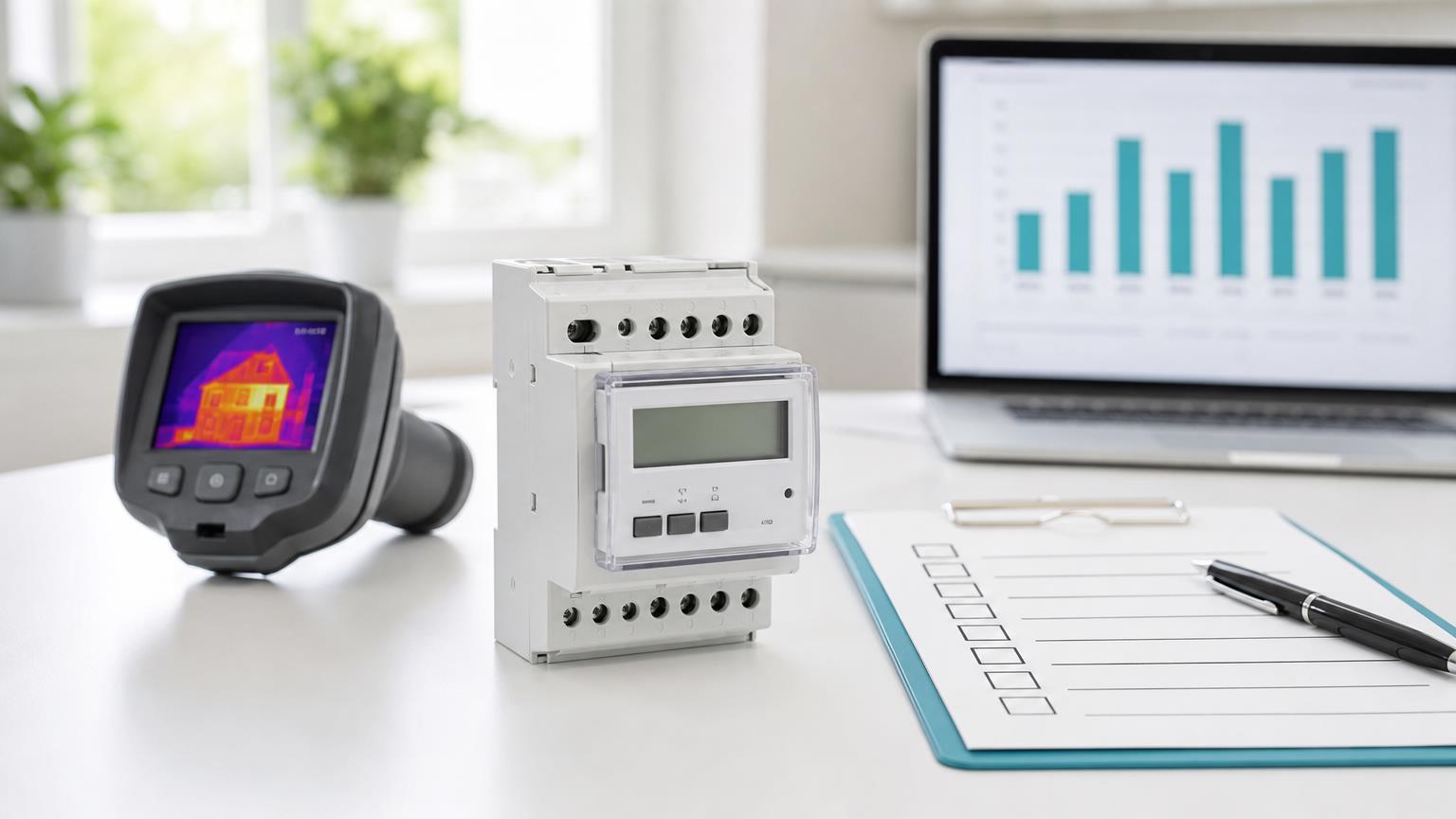
An energy audit is a systematic review of how a building or facility uses energy — where it goes, where it is wasted, and what it costs to fix. The output is a prioritized list of upgrades with savings estimates and payback periods. Audits typically uncover 5–30% savings potential, which is why utilities, governments and businesses fund them.
The three levels of audit
| Level | What's done | Typical cost (home) | Output |
|---|---|---|---|
| Walkthrough (Level 1) | Visual inspection, bill review, interviews | $100–$300 | Low-cost / no-cost measures |
| Diagnostic (Level 2) | Adds measurements: thermal imaging, metering, blower-door | $300–$600 | Detailed savings list with estimates |
| Investment-grade (Level 3) | Engineering analysis, calibrated models, financial analysis | $1,000+ (or per-project) | Bankable retrofit plan |
Commercial and industrial audits are usually quoted per project and can range from a few thousand dollars for a small facility to tens of thousands for investment-grade studies.
What an auditor actually checks
- Envelope: insulation, windows, air leaks (thermal imaging is the key tool).
- Lighting: lamp types, controls, occupancy sensors — lighting is usually the cheapest win.
- HVAC: equipment age, thermostat schedules, filter condition, duct leakage.
- Motors and drives: oversized or fixed-speed motors are prime targets for VFDs.
- Metering and data: what's being measured? Without per-circuit meters, savings are guesswork — auditors increasingly install temporary or permanent energy meters and current transformers to quantify loads.
- Tariff structure: time-of-use, demand charges, and power factor penalties.
Why metering matters in an audit
An audit is only as good as its data. A single utility bill shows total kWh but hides the breakdown: which circuit, which hours, which equipment. That's why professional audits use:
- Temporary clamp-on split-core CTs to profile individual circuits without downtime.
- Data-logging energy meters to capture 24/7 load curves.
- Power analyzers to detect power factor issues and harmonics.
If your facility already has permanent submetering, the audit starts from real data — faster and more accurate. After the audit, keeping the meters in place lets you verify that promised savings actually materialize.
What an audit report looks like
- Executive summary with total potential savings and cost.
- Energy-use breakdown by end use (heating, cooling, lighting, equipment).
- Prioritized measure list, each with: investment, annual savings, payback, and simple ROI.
- Utility incentive and rebate opportunities.
How to get the most from an audit
- Provide 12 months of utility bills — auditors need the seasonal picture.
- Do a quick self-audit first: list your big loads, run hours, and obvious waste.
- Ask for payback periods, not just savings percentages.
- Plan to meter before and after: submetering converts the audit from a one-time report into a continuous improvement loop.
FAQ
What is an energy audit?
An energy audit is a systematic review of how a building or facility uses energy. It identifies where energy is wasted, quantifies the savings potential, and prioritizes efficiency upgrades with cost estimates and payback periods.
How much does a home energy audit cost?
Typical ranges: $100–$300 for a basic walkthrough audit, $300–$600 for a diagnostic audit with blower-door and thermal imaging, and more for investment-grade commercial audits. Some utilities offer subsidized or free audits.
What are the three types of energy audits?
Walkthrough (preliminary, visual inspection), Diagnostic (adds measurements such as thermal imaging and metering), and Investment-grade (detailed engineering analysis with calibrated models and financial analysis).
Are energy audits worth it?
Usually yes. Audits typically identify 5–30% savings potential, and many recommended measures pay back within 1–3 years. For homes, the audit cost is often recovered by the first year or two of savings.
Final Thoughts
An energy audit turns "high bills" into a concrete, prioritized action list — and permanent metering turns the audit into a continuous improvement loop. Yomin Electric supplies the energy meters, split-core and ring CTs auditors use to quantify loads, plus RS485 options for long-term monitoring after the audit.
Related reading: Factory Energy Monitoring and How Energy Meters Improve Home Efficiency.
Need Help Choosing the Right Product?
Our engineers can recommend the exact model, rating and configuration for your project. Tell us your requirements and get a factory-direct quote within 24 hours.