What Is a Split-Core Current Transformer? Installation Without Downtime
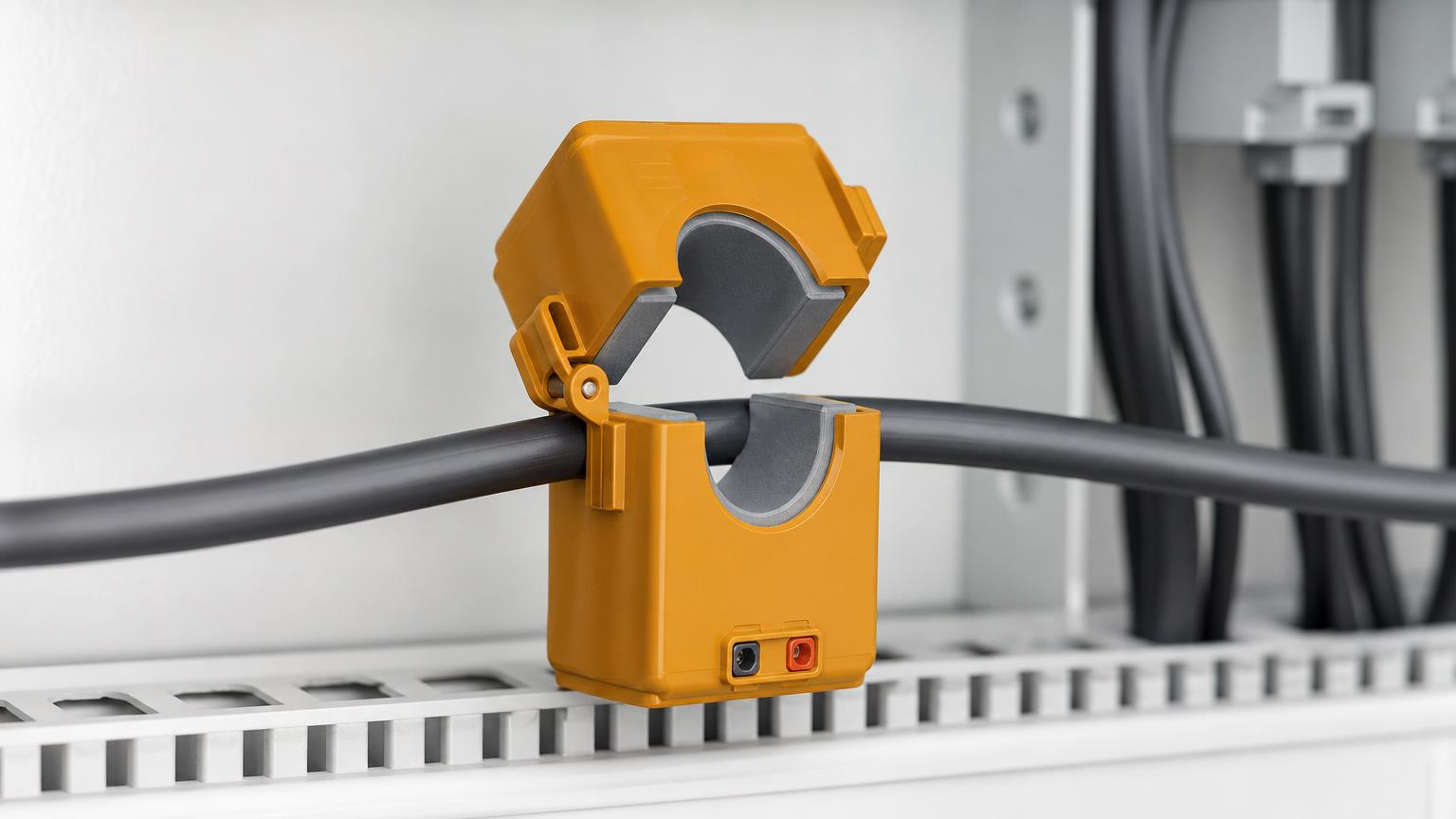
A split-core current transformer (CT) has a hinged or two-part core that opens so it can be clamped around an existing conductor without disconnecting it. That one feature — install without de-energizing — makes split-core CTs the default choice for retrofitting energy monitoring into live panels, and the reason they appear in most submetering and solar projects.
How it works
Like any CT, a split-core CT measures the current flowing through a conductor by sensing its magnetic field. The difference is mechanical: instead of threading a wire through a closed ring, you open the core (like a clamp), place it around the cable, and latch it shut. The secondary winding connects to a meter or recorder just like a solid-core CT.
Split-core vs solid-core
| Aspect | Split-core CT | Solid-core CT |
|---|---|---|
| Installation | Clamp onto live cable | Must thread through or disconnect |
| Downtime | None | May require shutdown |
| Typical accuracy | Class 0.5–1.0 | Class 0.2s–1.0 |
| Cost | Slightly higher | Lower |
| Best for | Retrofit, monitoring, submetering | New builds, billing-grade metering |
Accuracy considerations
The split core introduces a small air gap at the joint, which slightly raises magnetizing current and can reduce accuracy at very low currents. Quality manufacturers compensate with better core materials and precision mating surfaces, so a good split-core CT holds class 0.5 across most of its range. Practical guidance:
- For monitoring and submetering, class 0.5–1.0 split-core CTs are perfectly adequate.
- For revenue billing, prefer solid-core or certified split-core CTs and verify with test reports.
- Always check the secondary burden (VA) matches your meter input.
Typical applications
- Retrofit energy monitoring: add meters to existing switchboards with zero shutdown — the most common use.
- Submetering: clamp CTs around tenant feeders in occupied buildings.
- Solar PV monitoring: measure inverter output and grid import/export.
- EV charging: monitor charger consumption without touching live terminals.
- Power quality surveys: temporary CTs for energy audits and studies.
How to choose one
- Window size: must clear your cable or busbar (check diameter, not just amps).
- Primary rating: choose above your maximum expected load — typically 1.25× full load — so readings stay in the accurate range.
- Secondary: 5 A (common) or 1 A (long cable runs) — match your meter.
- Accuracy class and burden: confirm both match the meter datasheet.
- Cable length: long secondary leads need higher burden ratings or 1 A secondaries.
Yomin Electric’s split-core CT range covers window sizes from small cables to large busbars, class 0.5–1.0, with 5 A and 1 A secondaries — matched to our energy meters for plug-and-play monitoring retrofits.
FAQ
What is a split-core current transformer?
A split-core current transformer has a hinged or two-part core that opens so it can be clamped around an existing conductor without disconnecting it. This makes retrofitting energy monitoring safe and fast, because the circuit stays live.
Are split-core CTs as accurate as solid-core CTs?
Nearly, in good hands. The split core introduces a small air-gap effect, so accuracy is typically rated class 0.5 to 1.0 depending on the model and core quality. For most monitoring and submetering applications this is perfectly adequate; for revenue billing, solid-core or carefully matched split-core CTs are preferred.
Where are split-core CTs used?
Retrofit energy monitoring, submetering, solar PV monitoring, EV charging metering, and any project where the conductor cannot be de-energized. They are the default choice for adding meters to existing panels.
How do I choose a split-core CT?
Match the window size to your cable or busbar, select a primary rating above your maximum load (typically ≥1.25× full load), choose the secondary (5 A or 1 A) to suit your meter, and confirm the accuracy class and burden match your meter's requirements.
Final Thoughts
Split-core CTs turn "we should monitor this circuit" from a shutdown project into a 10-minute clamp job. For retrofits, submetering and solar, they are the standard tool — just match window, ratio, class and burden to your meter. Yomin Electric supplies matched split-core CT + energy meter packages so you can order once and install in one visit.
Related reading: How to Choose a Current Transformer and What Is a Current Transformer Meter.
Need Help Choosing the Right Product?
Our engineers can recommend the exact model, rating and configuration for your project. Tell us your requirements and get a factory-direct quote within 24 hours.