Understanding 50 Amp Wire Size Requirements
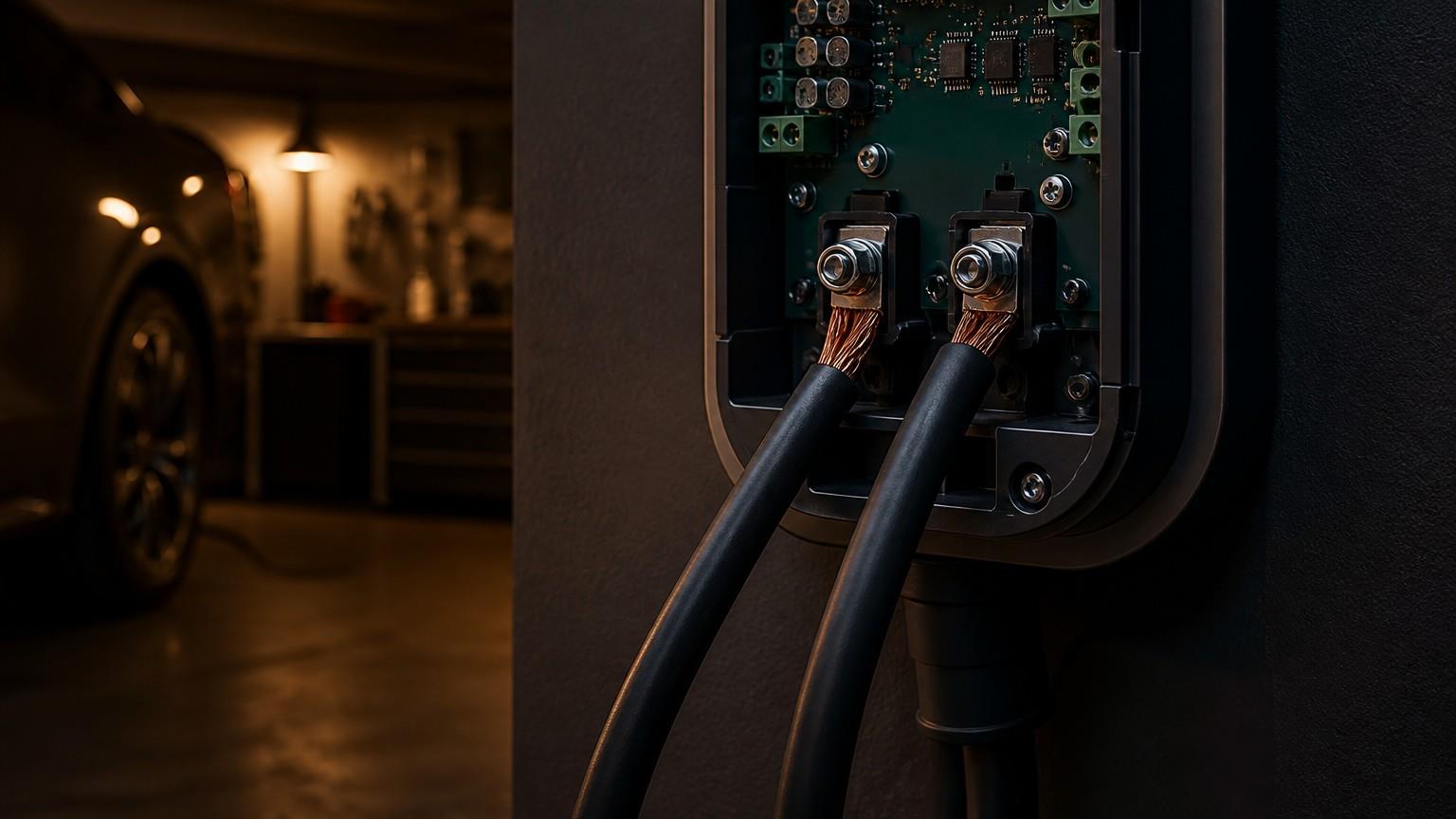
A 50 amp circuit is a high-capacity branch circuit or feeder commonly used for appliances and equipment that draw more power than standard 15 or 20 amp household circuits. You may see 50 amp wiring used for electric ranges, EV chargers, welders, RV outlets, hot tubs, subpanels, and certain workshop tools. Because these loads can generate significant heat if the conductors are undersized, choosing the right 50 amp wire size is not just a performance issue; it is a safety and code-compliance issue.
In the United States, wire sizing is generally based on the National Electrical Code, also known as NEC or NFPA 70. The NEC is widely treated as the primary safety benchmark for electrical installations, but your local authority may adopt a specific edition and may add local amendments.
Quick Answer: What Size Wire for 50 Amp Service?
For many typical residential 50 amp circuit installations, 6 AWG copper wire is the common starting point. In some installations, 8 AWG copper conductors may be rated for 50 amps only when the wiring method, insulation rating, termination temperature rating, and code conditions allow it. Aluminum conductors generally need to be larger than copper for the same ampacity.
A practical rule of thumb is:
- 6 AWG copper is commonly used for a 50 amp breaker.
- 8 AWG copper may be acceptable in certain 75°C-rated installations, such as some individual conductors in conduit, but it is not a universal answer.
- 6 AWG aluminum may be rated 50 amps in the 75°C column, depending on the installation and terminations.
- 4 AWG aluminum is often selected when extra capacity, 60°C limitations, voltage drop, or conservative design calls for upsizing.
The key point is that the "right" wire gauge for 50 amp service depends on more than the breaker. It depends on conductor material, insulation type, wiring method, temperature rating, distance, load type, and local code requirements.
Why 50 Amp Wire Size Matters
Electric current creates heat as it moves through a conductor. When a wire is too small for the amperage it carries, that heat can build up faster than the wire insulation and terminals are designed to handle. Over time, this can damage insulation, loosen connections, trip breakers, or create fire hazards.
A 50 amp breaker is designed to protect the circuit conductors from excessive current. But the breaker can only do its job if the wire size is properly matched to the load and wiring method. If someone installs a conductor that is too small and simply connects it to a 50 amp breaker, the breaker may allow more current than the conductor can safely carry.
That is why wire size is usually selected from an ampacity chart, then adjusted for real-world factors like temperature, bundling, conduit fill, and voltage drop.
Understanding Ampacity
Ampacity is the maximum amount of current a conductor can carry under specified conditions without exceeding its temperature rating. An ampacity chart does not simply say "this wire is always good for this many amps." Instead, it gives allowable ampacities based on assumptions such as conductor material, insulation temperature rating, number of current-carrying conductors, and ambient temperature.
NEC-style ampacity tables commonly show separate ratings for copper and aluminum conductors at 60°C, 75°C, and 90°C insulation columns. For example, common ampacity charts list 6 AWG copper at 55 amps in the 60°C column, 65 amps in the 75°C column, and 75 amps in the 90°C column. The same charts list 8 AWG copper at 40 amps in the 60°C column and 50 amps in the 75°C column.
| Conductor | Ampacity @ 60°C | Ampacity @ 75°C | Ampacity @ 90°C |
|---|---|---|---|
| 6 AWG copper | 55A | 65A | 75A |
| 8 AWG copper | 40A | 50A | 55A |
| 6 AWG aluminum | 40A | 50A | 55A |
| 4 AWG aluminum | 55A | 65A | 75A |
This is why two people can give different answers to "What is the correct 50 amp wire?" and both may be describing different installation conditions. The conductor size alone is not enough. You also need to know the cable type, terminal ratings, insulation rating, and installation environment.
Copper vs. Aluminum 50 Amp Wire
Copper and aluminum conductors are both used in electrical systems, but they do not have the same current-carrying ability at the same gauge. Copper conducts electricity more efficiently, so a copper conductor can usually be smaller than an aluminum conductor for the same amperage.
For 50 amp wiring, copper is common in residential branch circuits because it is compact, widely available, and familiar to many electricians. Aluminum is often used in feeders, larger circuits, and cost-sensitive installations, but it requires careful attention to compatible terminals, anti-oxidation practices where specified, torque requirements, and expansion characteristics.
| Property | 6 AWG Copper | 6 AWG Aluminum |
|---|---|---|
| Ampacity (75°C column) | 65A | 50A |
| Typical 50A circuit use | Standard residential choice | Only with 75°C-rated terminations and aluminum-rated terminals |
| Weight and cost | Higher | Lower |
| Terminal requirements | Standard | Must be listed for aluminum (CO/ALR or anti-oxidant compound) |
When comparing copper and aluminum for a 50 amp circuit, remember:
- Copper generally allows a smaller gauge than aluminum.
- Aluminum conductors must be used only with terminals listed and rated for aluminum.
- Connections must be torqued correctly according to manufacturer instructions.
- Local code and equipment labeling may restrict what materials are allowed.
If you are unsure whether to use copper or aluminum, ask a licensed electrician to evaluate the full circuit design rather than relying only on a wire size calculator.
Common 50 Amp Circuit Applications
A 50 amp breaker may be used in several different settings. Each application can have different rules, load calculations, receptacle requirements, grounding requirements, and conductor configurations.
- Electric ranges — many residential electric ranges use 120/240 volt circuits with two hot conductors, one neutral, and one equipment grounding conductor.
- EV chargers — a 50 amp circuit is often used to supply a 40 amp continuous EV charging load, but the charger, nameplate, and local code determine the final circuit requirements.
- RV outlets — a 50 amp RV receptacle is typically a 120/240 volt configuration, not simply a larger version of a standard 120 volt outlet.
- Welders — welders may have duty-cycle rules and manufacturer-specific breaker and conductor requirements.
- Hot tubs and spas — these installations often include GFCI protection, bonding, disconnect placement, and outdoor wiring requirements.
- Subpanels — a 50 amp feeder to a subpanel must be sized for the calculated load and installed with correct grounding and neutral separation.
The same 50 amp wire size may not be correct for every one of these applications. Always start with the equipment nameplate and installation instructions.
The Role of the 50 Amp Breaker
A 50 amp breaker protects the wiring from overcurrent conditions. It is not a tool for "adding capacity" to an existing circuit. Replacing a smaller breaker with a 50 amp breaker without replacing the wire and verifying the full circuit is unsafe.
Before using a 50 amp breaker, confirm:
- The conductor ampacity is suitable for 50 amps.
- The panel is rated for the breaker type.
- The load calculation supports the added circuit.
- The receptacle or hardwired equipment is rated for the circuit.
- The grounding and bonding are correct.
- Required GFCI or AFCI protection is included where applicable.
- Local permitting and inspection requirements are followed.
A breaker, conductor, receptacle, and equipment must be treated as one complete system.
Why 6 AWG Copper Is Commonly Recommended
The reason 6 AWG copper is so often recommended for a 50 amp circuit is that it provides margin across many common installation types. According to the ampacity values cited above, 6 AWG copper is rated above 50 amps even in the 60°C column, while 8 AWG copper is only 40 amps in that same column.
This distinction matters because many cable assemblies and equipment terminations are limited by temperature-rating rules. For example, a conductor may have 90°C-rated insulation, but the final allowable ampacity can still be limited by the temperature rating of the terminals or the wiring method. Some ampacity references explain that derating may begin from a higher insulation column, while final ampacity must still respect termination temperature limits.
In plain terms: the printing on the wire is only part of the answer. The breaker, device terminals, cable assembly, and installation conditions all affect the final allowable ampacity.
When 8 AWG Copper May or May Not Work
One of the most common points of confusion is whether 8 AWG copper can be used on a 50 amp breaker. The answer is: sometimes, but not always.
8 AWG copper appears as 50 amps in the 75°C column of some ampacity charts, but 8 AWG copper is not 50 amps in the 60°C column. That means 8 AWG copper may be acceptable in a properly designed installation with the correct conductor insulation, wiring method, and 75°C-rated terminations. However, it may not be acceptable for common cable types that must use the 60°C ampacity column.
This is why online answers can be misleading. A person discussing individual THHN or THWN conductors in conduit may give a different answer than someone discussing NM-B cable in a wall. Both are talking about "8 gauge wire," but the code treatment can differ.
Voltage Drop and Long Wire Runs
Ampacity tells you how much current a conductor can safely carry from a heat standpoint. Voltage drop is a separate performance issue. The longer the wire run, the more resistance the circuit has, and the more voltage can drop before it reaches the equipment.
Excessive voltage drop can cause poor performance, nuisance issues, motor heating, dimming, or reduced equipment efficiency. For long 50 amp wiring runs, electricians may upsize from the minimum wire size to reduce voltage drop.
A wire size calculator can be useful for estimating voltage drop, but it should not replace code-based ampacity selection. Use calculators as planning tools, then verify the result against the applicable NEC rules, equipment instructions, and local requirements.
When estimating voltage drop, you need:
- Circuit voltage
- Load amperage
- One-way run length
- Copper or aluminum conductor material
- Conductor size
- Acceptable voltage drop percentage
- Whether the load is continuous or intermittent
If the run is unusually long, upsizing the hot conductors may also require changes to the equipment grounding conductor sizing. Grounding conductors are sized differently from current-carrying conductors, and references based on NEC Table 250.122 commonly show a 50 amp overcurrent device using a minimum 10 AWG copper or 8 AWG aluminum equipment grounding conductor under standard conditions.
Continuous Loads and 50 Amp Circuits
A continuous load is generally one expected to run for three hours or more. Many electrical designs apply the 125 percent rule to continuous loads, meaning the circuit is sized so the continuous load does not exceed 80 percent of the breaker rating.
For a 50 amp circuit, that often means a continuous load of about 40 amps. This is why many EV chargers on a 50 amp breaker are configured for 40 amp charging rather than a full 50 amp continuous draw. Always follow the equipment instructions and applicable code rules for the specific load.
Do not assume that a 50 amp breaker means every connected device can continuously draw 50 amps. The load type matters.
How to Choose the Right Size Wire for 50 Amp Service
- Identify the equipment load — start with the equipment nameplate or manufacturer installation manual. Determine voltage, amperage, phase, conductor count, and whether the load is continuous.
- Confirm the breaker requirement — some equipment specifies a maximum breaker size, minimum circuit ampacity, or both. These values are not interchangeable. Follow the manufacturer's instructions.
- Select the conductor material — decide whether the circuit will use copper or aluminum. Confirm that all terminals and devices are rated for the chosen material.
- Check the wiring method — NM-B cable, SER cable, MC cable, UF cable, and individual conductors in conduit may be treated differently. The wiring method can determine which temperature column and installation rules apply.
- Review the ampacity chart — use an ampacity chart that matches the applicable NEC edition and conductor type. Remember that charts are based on specific assumptions, not every possible installation condition.
- Account for derating — ambient temperature, multiple current-carrying conductors in the same raceway or cable, rooftop exposure, and other conditions can reduce allowable ampacity.
- Check voltage drop — for long runs, calculate voltage drop and consider upsizing the conductors if needed.
- Verify grounding and bonding — select the correct equipment grounding conductor and confirm neutral and ground treatment, especially for subpanels and 120/240 volt circuits.
- Pull permits and schedule inspection — many 50 amp installations require a permit and inspection. This is especially common for EV chargers, hot tubs, subpanels, and new appliance circuits.
Common Mistakes to Avoid
- Installing a 50 amp breaker on existing undersized wire
- Assuming 8 AWG copper is always acceptable for 50 amps
- Ignoring the difference between copper and aluminum conductors
- Forgetting that terminals may be rated 60°C or 75°C
- Treating voltage drop as the same thing as ampacity
- Using the wrong receptacle configuration
- Sharing neutrals incorrectly
- Failing to separate neutral and ground in a subpanel
- Skipping GFCI protection where required
- Relying on a generic wire size calculator without checking code rules
The safest approach is to design the circuit from the load backward, not from the breaker forward.
FAQ
Can I use 8 AWG copper on a 50 amp breaker?
Sometimes, but not always. 8 AWG copper is rated 50 amps in the 75°C column but only 40 amps in the 60°C column, so it depends on the insulation, wiring method, and terminal ratings. 6 AWG copper is the safer, more common choice.
What size aluminum wire do I need for 50 amps?
6 AWG aluminum may be rated 50 amps in the 75°C column with suitable terminations, and 4 AWG aluminum is often chosen when 60°C limitations, voltage drop, or extra capacity call for upsizing.
Why is a 50 amp EV charger circuit usually limited to 40 amps?
Because EV charging is a continuous load, the 125 percent rule applies: a 50 amp circuit is designed for continuous loads up to about 40 amps (80% of the breaker rating).
What ground wire size is needed for a 50 amp circuit?
Under standard conditions, NEC Table 250.122 commonly shows a minimum 10 AWG copper or 8 AWG aluminum equipment grounding conductor for a 50 amp overcurrent device. Always verify with the applicable code edition.
Final Takeaway
The best general answer for 50 amp wire size is often 6 AWG copper, especially for typical residential installations where a conservative, widely accepted conductor size is needed. However, the correct size wire for 50 amp service depends on the wiring method, conductor material, insulation rating, terminal temperature rating, circuit length, load type, and local code.
A 50 amp circuit is powerful enough that small assumptions can create real hazards. Use an ampacity chart, verify the equipment instructions, consider voltage drop, and involve a licensed electrician when installing or modifying 50 amp wiring.
If you are planning a related upgrade, Yomin Electric's engineering guides cover the same ground for higher currents — see What Size Wire for a 60 Amp Breaker? and Voltage Stabilizers Explained, or ask our engineers about metering and protection for your installation.
Need Help Choosing the Right Product?
Our engineers can recommend the exact model, rating and configuration for your project. Tell us your requirements and get a factory-direct quote within 24 hours.