Are Smart Meters Safe? What the Evidence Actually Says
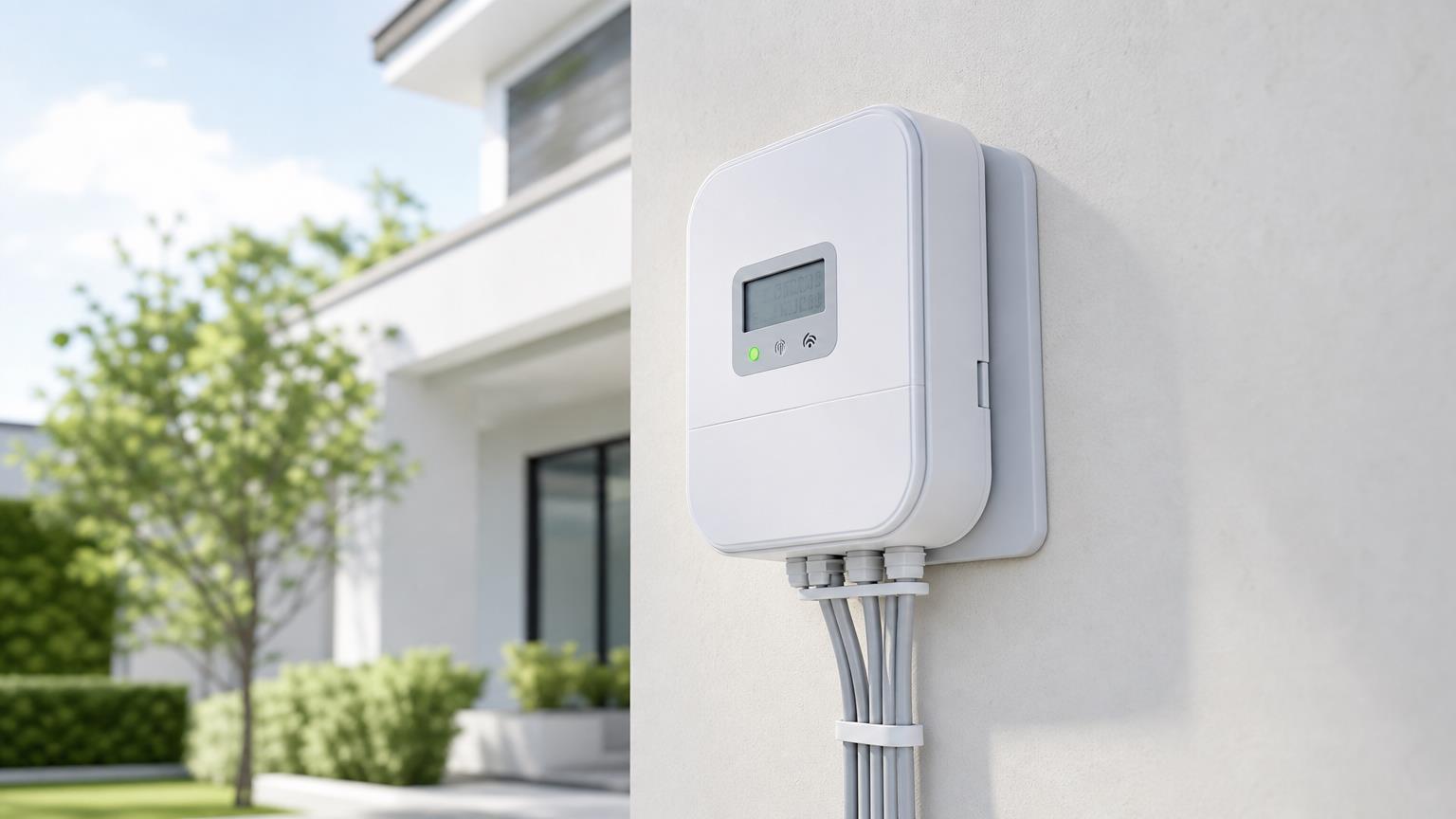
Yes — smart meters are safe, and the evidence is consistent across three areas people worry about most: radio exposure, fire risk, and data privacy. Smart meters transmit small amounts of data over a radio link for a few seconds each day, operate under the same safety standards as conventional meters, and are protected by encryption and metering regulations. Here is what the numbers actually say.
1. Radio frequency (RF) exposure
A smart meter communicates wirelessly with the utility network. The key question is how much radio energy reaches you. Two facts matter:
- Low power: typical smart meters transmit at around 0.1–1 W peak, only a few seconds per day or per communication window.
- Distance: the meter sits on your wall or in a cabinet — usually metres away from where people spend time. Exposure falls with the square of distance.
International exposure limits are set by ICNIRP and adopted by bodies such as the WHO and national regulators. Everyday smart meter exposure is typically thousands of times below those limits — far lower than holding a mobile phone to your head during a call.
How smart meters compare to everyday devices
| Device | Typical RF output | Transmission duty | Typical distance from body |
|---|---|---|---|
| Smart meter | ~0.1–1 W peak | Seconds per day | Several metres (wall) |
| Mobile phone | Up to ~1–2 W peak | During calls/data | Centimetres (against head) |
| Wi-Fi router | ~0.1 W typical | Continuous | Metres, but often closer |
| Baby monitor | ~0.01–0.1 W | Continuous | Metres |
Because smart meters transmit rarely, at low power, and from a distance, their time-averaged exposure is among the lowest of the devices listed.
2. Fire safety
Smart meters are manufactured and certified against the same standards as conventional meters — the IEC 62052 / IEC 62053 series for electricity metering, plus national wiring and product-safety rules. Like any electrical device, the real risk is installation quality:
- Loose terminations and undersized wiring cause most metering-side heat problems, not the meter electronics.
- Certified installers follow utility regulations for earthing, isolation, and enclosure.
- Regulators in many countries have investigated smart meter fire reports and consistently attributed them to installation faults rather than meter design.
The practical takeaway: choose meters from manufacturers with certified production (MID, IEC, CE) and always use a qualified installer. Yomin Electric’s smart meter range is produced under IEC 62053 certification with factory testing on every unit.
3. Data privacy
Concerns here usually fall into two categories: what the meter can see, and who can access the data.
- What it sees: standard smart meters record total consumption (kWh) and sometimes 15–60 minute interval readings. They do not identify individual appliances. Appliance-level detection requires additional sensors or advanced analytics beyond the meter itself.
- Who can access it: utility metering networks encrypt communications and enforce role-based access. Customer data is protected by metering codes and data-protection law; third parties need consent or a regulatory basis.
If you are buying meters for a project — not connecting to a utility network — the data stays inside your own system, readable only through your own software.
What the standards bodies say
- WHO: reviews evidence on RF exposure; no established health effects at exposure levels below ICNIRP limits.
- ICNIRP: publishes exposure guidelines that national regulators adopt; smart meter exposure is typically orders of magnitude below these.
- National regulators: UK, EU, US state bodies and others have published assessments confirming smart meter RF levels are far below limits.
FAQ
Do smart meters emit harmful radiation?
Smart meters emit low-power radio signals for a few seconds at a time, typically far below international exposure limits (ICNIRP). Typical peak output is around 1 W or less, similar to or lower than a mobile phone, and much less than a Wi-Fi router over time.
Are smart meters a fire risk?
Smart meters are covered by the same product safety standards as conventional meters (IEC 62052 / IEC 62053 series and national wiring regulations). Reported incidents are rare and almost always traced to poor installation rather than the meter design itself. Always use certified installers.
Can smart meters see what appliances I use?
Standard smart meters transmit total consumption data (kWh) and sometimes interval readings. They do not identify individual appliances by default. Detailed appliance-level analytics requires additional sensors, not the meter itself.
Who can access my smart meter data?
Utility smart metering systems are protected by encryption and access controls defined by national data-protection and metering regulations. Customers can typically access their own data through supplier portals, and third parties need consent or a regulatory basis.
Final Thoughts
When you see a claim that smart meters are unsafe, check what it is actually comparing against. On RF exposure, fire safety, and privacy, smart meters sit within established standards — and in most cases with lower exposure than the phone in your pocket. For metering projects where you control the whole chain, a certified smart meter gives you accurate data with none of the utility-network concerns.
Related reading: Smart Meters Explained and How Does a Smart Electricity Meter Work.
Need Help Choosing the Right Product?
Our engineers can recommend the exact model, rating and configuration for your project. Tell us your requirements and get a factory-direct quote within 24 hours.