Digital vs Electromechanical Meters: What's the Difference?
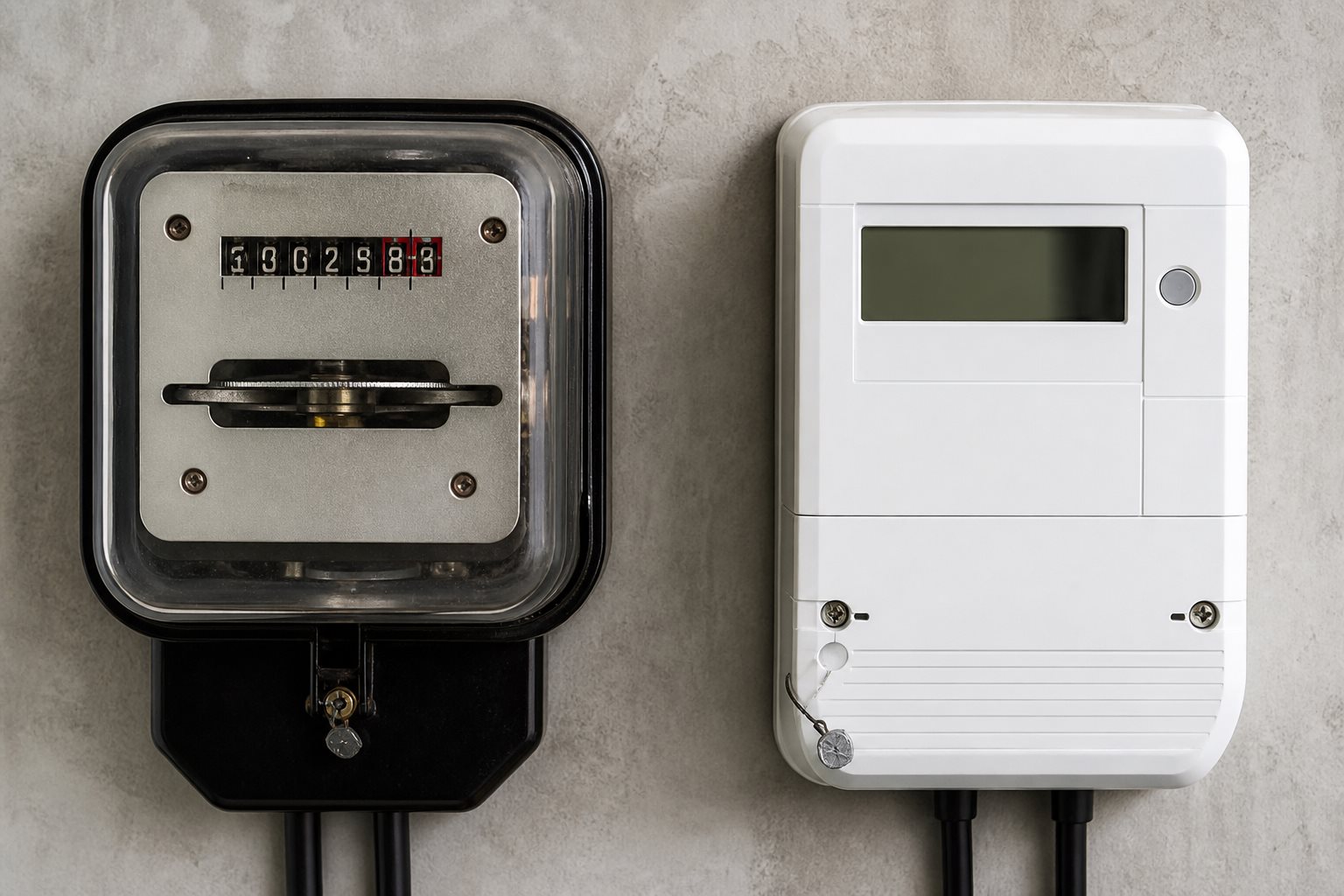
If you have ever looked at an electricity meter, you have probably seen one of two designs: an old box with a spinning metal disc, or a newer box with a digital display. These are the electromechanical meter and the digital meter — two generations of the same device that measure the same kilowatt-hours in very different ways.
This article compares them fairly so you can understand what you have at home and what you should choose for a new installation.
What Is an Electromechanical Meter?
The electromechanical meter — often called an induction or Ferraris meter — was invented over a century ago and is still found in millions of homes. Inside, a spinning aluminum disc rotates faster as you use more power. The disc turns gears, and the gears turn dials that count your total consumption in kilowatt-hours. It is a brilliant mechanical machine: no electronics, no software, and it can run for decades.
What Is a Digital (Electronic) Meter?
A digital meter replaces the disc and gears with an electronic chip and an LCD display. It measures current and voltage electronically, calculates energy continuously, and shows the total on a clear screen. Because it has a processor, it can do much more than count: it can record usage by time of day, support prepaid tokens, and even communicate wirelessly as a smart meter.
Digital vs Mechanical: Head to Head
- Accuracy: Digital meters are more accurate across the full range of loads. Mechanical meters drift slightly as they age and are poor at measuring very small loads.
- Features: Digital meters support prepaid, time-of-use tariffs, remote reading, and alarms. Mechanical meters only count total usage.
- Tamper resistance: Digital meters detect opening, tilting, and reverse current, making theft far harder. Mechanical meters are easier to slow down or bypass.
- Lifespan: Mechanical meters are legendary for lasting 30+ years, but they lose accuracy. Digital meters are typically rated for 10–15 years with consistent precision.
- Cost: Mechanical meters are cheaper to manufacture, but the total cost of ownership is lower for digital once you count reading visits and lost revenue.
Which One Should You Choose?
For any new installation, a digital meter is the clear choice — it is more accurate, harder to tamper with, and ready for prepaid or smart features later. For utilities, digital meters pay for themselves quickly by eliminating manual reading and revenue loss. For a small, simple site where nothing will ever change, a mechanical meter can still do the job, but replacement parts and labor make it less attractive over time.
If you are replacing meters, check your local utility's requirements first — many now mandate electronic meters for new connections. Our digital energy meters range from basic DIN-rail models to prepaid STS meters, all certified to IEC 62053.
Frequently Asked Questions
Which meter type is more accurate?
Digital meters are consistently more accurate, especially at low loads where mechanical meters struggle. Accuracy classes like 0.5 or 1.0 are standard for digital meters, while aging mechanical meters can drift beyond their rated class.
Can a mechanical meter be converted to digital?
No — the two technologies are completely different. Upgrading means replacing the meter itself. The good news is that most utilities can swap a mechanical meter for a digital or smart meter in a short site visit.
Do digital meters use more electricity than mechanical meters?
Yes, slightly — a digital meter consumes a tiny amount of power to run its display and chip, usually less than a single watt. This is negligible compared to the accuracy and revenue benefits it provides.
Upgrading to Digital Meters?
We supply digital DIN-rail meters, smart meters, and prepaid meters for utilities, builders, and distributors.
Request a Quote →