kVA vs kW: What's the Difference and How to Convert
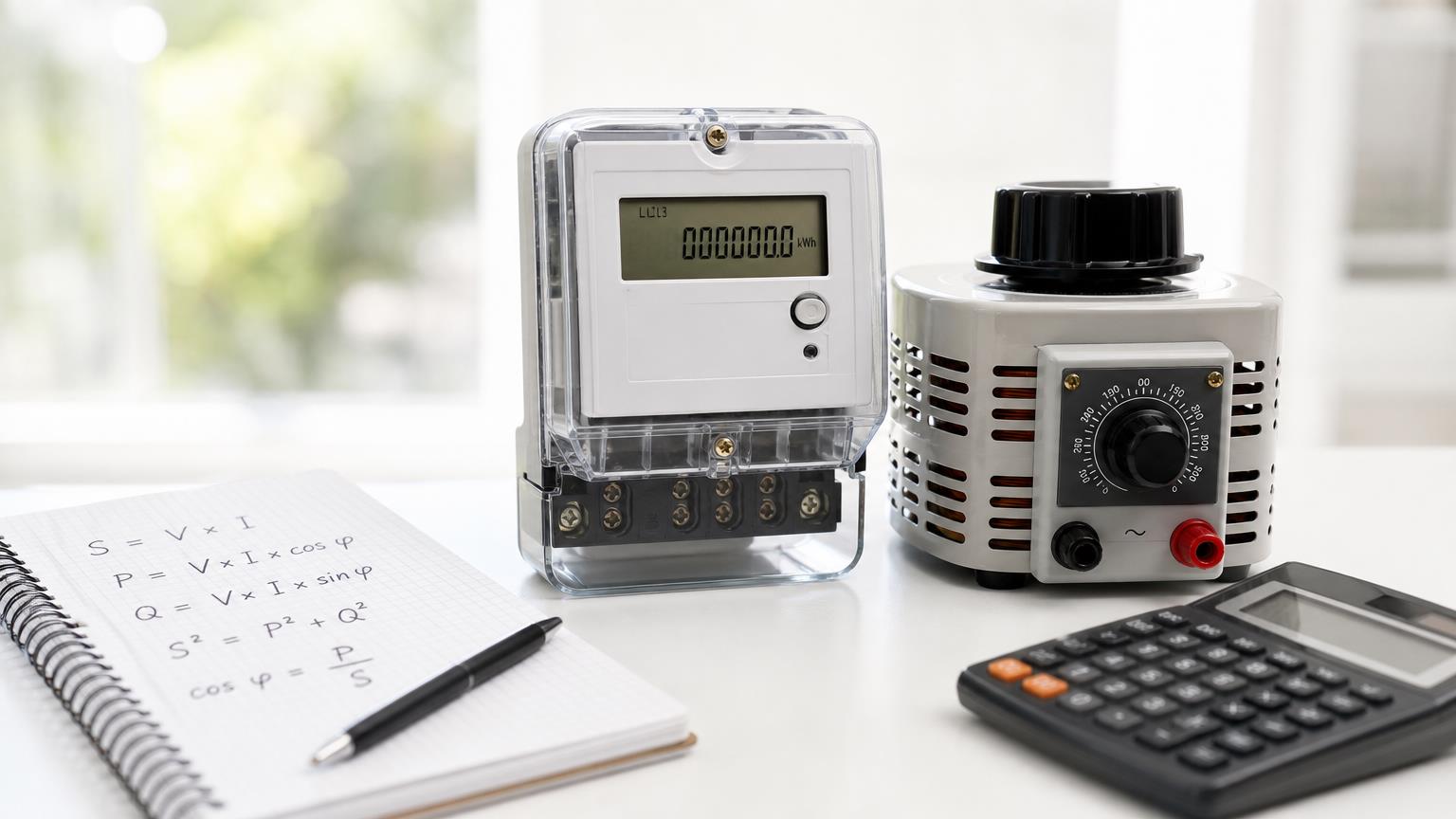
kW (kilowatt) is real power — the energy actually doing work. kVA (kilovolt-ampere) is apparent power — the total power the supply must deliver, including the reactive component that does no work. They are connected by power factor: kW = kVA × PF. Every engineer who sizes generators, transformers or UPS systems must know which number they are looking at.
Definitions
| Term | Unit | Meaning | Example |
|---|---|---|---|
| Real power | kW | Power that does useful work | Motor shaft output, heating |
| Reactive power | kVAR | Power that supports magnetic fields | Motor windings, transformers |
| Apparent power | kVA | Vector sum of real + reactive | What the generator must supply |
The relationship: kW = kVA × PF, where PF (power factor) is between 0 and 1. At PF 1.0 (purely resistive loads), kVA equals kW. With motors and transformers, PF typically sits between 0.7 and 0.95, so kVA is always larger than kW.
Why generators and transformers are rated in kVA
The physical limit of a generator or transformer is current — current heats the windings. Current corresponds to apparent power (kVA), not real power (kW). A 10 kVA generator can deliver 10 kW only at PF 1.0; at PF 0.8 it delivers 8 kW, but it is still a "10 kVA" machine because the current limit is unchanged. Rating in kVA keeps the spec honest regardless of what load you connect.
Conversion examples
- kVA → kW: a 20 kVA transformer at PF 0.85 delivers 20 × 0.85 = 17 kW.
- kW → kVA: 12 kW of motor load at PF 0.8 needs 12 ÷ 0.8 = 15 kVA of supply capacity.
- Generator sizing: total load 12 kW, PF 0.8, 20% headroom → 15 kVA × 1.2 = 18 kVA generator.
Where you see each unit
- kVA: generator nameplates, transformer ratings, UPS ratings, switchgear.
- kW: motor ratings, appliance consumption, utility billing (kWh is energy, kW×hours).
- Both: multifunction energy meters and power analyzers display kW, kVA and PF simultaneously — which is exactly what you need to size or verify equipment.
Common mistakes
- Assuming kVA = kW on a generator — you lose 10–30% of capacity depending on PF.
- Converting without knowing PF — always measure or estimate PF first.
- Ignoring PF penalties — a low-PF facility pays more even if kW is unchanged (see our power factor guide).
FAQ
What is the difference between kVA and kW?
kW (kilowatt) is real power that does useful work. kVA (kilovolt-ampere) is apparent power — the total power drawn from the supply, including reactive power. They are related by power factor: kW = kVA × PF. At PF 1.0 they are equal; at lower PF, kVA is always larger than kW.
How do I convert kVA to kW?
Multiply kVA by the power factor: kW = kVA × PF. For example, a 10 kVA generator at PF 0.8 delivers 10 × 0.8 = 8 kW of real power. To convert kW to kVA, divide by PF.
Why are generators and transformers rated in kVA instead of kW?
Because their limiting factor is current (heating in windings), which is set by apparent power (kVA), not real power. The same generator can supply different kW depending on the load's power factor, so the rating is stated in kVA.
What size generator do I need in kVA?
Add the real power (kW) of all loads you will run at once, divide by the expected power factor (typically 0.8), and add 20–25% headroom: kVA = (total kW ÷ PF) × 1.2. Example: 12 kW of loads at PF 0.8 → 12 ÷ 0.8 = 15 kVA → size 18–20 kVA.
Final Thoughts
kVA and kW are two sides of the same supply: one measures what you pay for capacity, the other what actually does work. Measure both with a multifunction energy meter, and you'll never mis-size a generator or transformer again. For variable-voltage work, our variac transformers are also rated in kVA — now you know why.
Related reading: kW vs kWh and What Is Power Factor.
Need Help Choosing the Right Product?
Our engineers can recommend the exact model, rating and configuration for your project. Tell us your requirements and get a factory-direct quote within 24 hours.