Time-of-Use (TOU) Metering: How It Works and Whether It Saves You Money
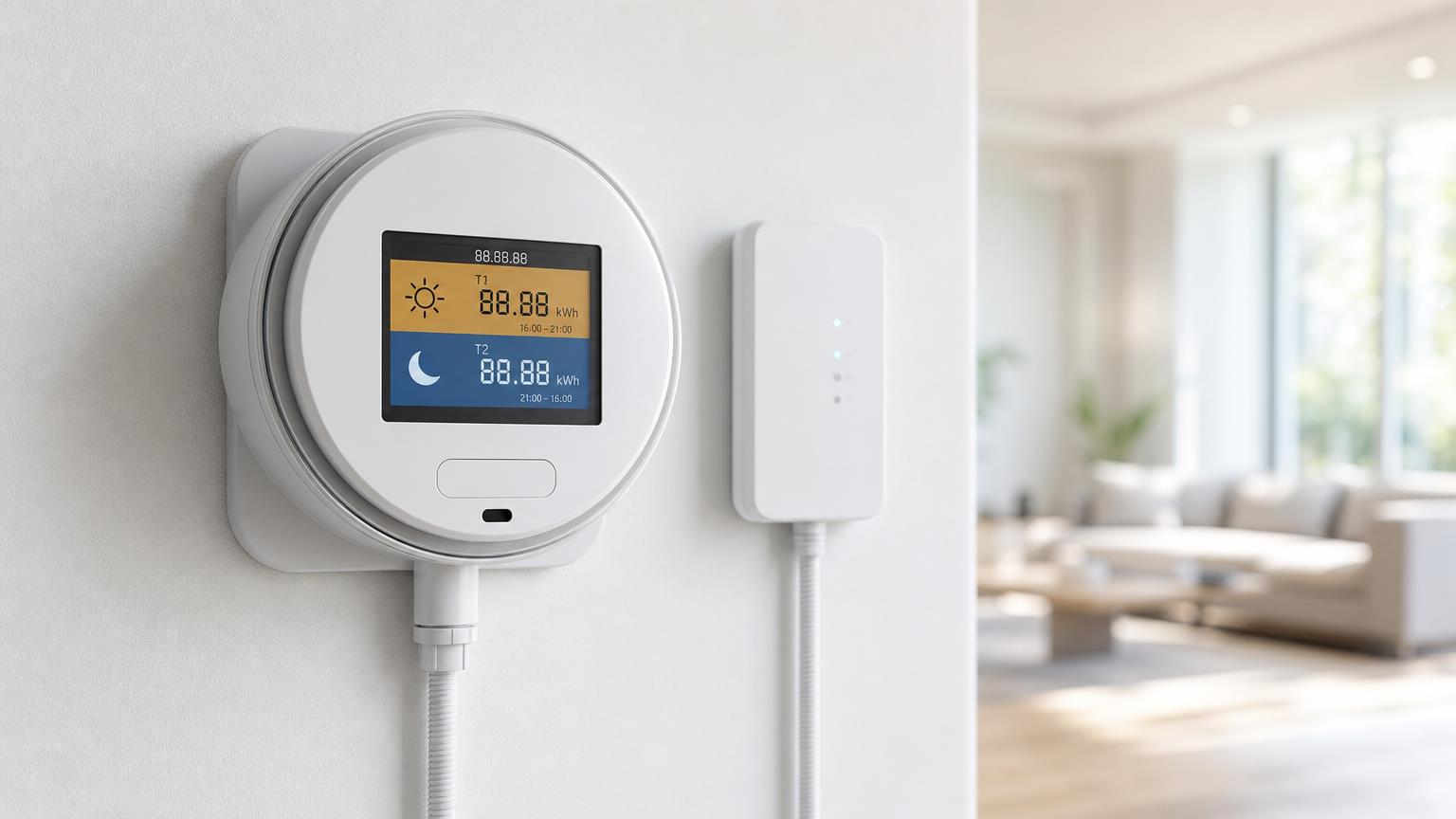
Time-of-use (TOU) metering records your electricity consumption in separate time windows — typically peak, shoulder, and off-peak — so you are charged a different rate in each window. It is the mechanism behind "shift your usage to save money" programs, and it is one of the main reasons utilities deploy smart meters. Whether it saves you money depends entirely on how much of your usage you can move into cheap windows.
How TOU tariffs work
Electricity costs the grid more at times of high demand (early evening, hot afternoons), because expensive peaker plants and network capacity are needed only at those moments. TOU tariffs pass that signal to customers:
| Window | Typical timing (varies by utility) | Relative rate |
|---|---|---|
| Peak | Afternoon–evening (e.g. 4–9 PM) | Highest (often 1.5–3× off-peak) |
| Shoulder | Morning and late evening | Medium |
| Off-peak | Night and early morning | Lowest |
Exact windows and rates differ by utility and region — always check your supplier’s TOU schedule before planning load shifts.
What a TOU meter actually does
A standard meter has a single kWh register. A TOU meter has multiple registers and an internal real-time clock:
- The clock knows which tariff period is active.
- Consumption is accumulated into the register for the current period (e.g. Peak 1 register, Off-peak 2 register).
- At billing time, the utility reads each register and applies the matching rate.
Modern TOU-capable smart meters go further: they record interval data (15/30/60-minute) that supports any future tariff redesign without a meter swap, and can switch tariff programs remotely.
Does TOU save you money?
The answer is a clear "it depends on your load profile":
- Wins if a large share of your usage is shiftable: EV charging at night, laundry and dishwashing after 9 PM, water heating on a timer, battery storage charging off-peak.
- Loses if you consume heavily during peak hours (home offices, daytime air conditioning, shops) with no way to shift.
A simple test: list your big appliances, note when they run, and estimate what share of kWh you could move to off-peak. If it is 30%+ of total usage, TOU is usually worth investigating. Many utilities also offer TOU with lower off-peak rates that reward EV owners and solar-plus-storage households.
TOU + solar + batteries
TOU tariffs pair naturally with solar and battery storage:
- Solar generates during the day; surplus can charge a battery instead of being exported at low rates.
- Battery discharges in the peak window, avoiding the most expensive kWh.
- Net metering rules vary widely, so model the tariff with your actual solar output before investing in more storage.
How to choose a TOU meter for your project
- Registers: confirm the meter supports the number of tariff periods you need (typically 2–4), with seasonal/weekend programs if required.
- Clock accuracy and battery: the internal clock must keep time through outages — check RTC backup battery life.
- Communication: RS485/Modbus or pulse output lets you read TOU registers remotely and build your own dashboards.
- Certification: for utility or billing use, choose meters certified to IEC 62053 (and MID where applicable).
- Demand capability: if your tariff also charges peak demand, pick a meter that logs maximum demand with timestamps.
FAQ
What is time-of-use metering?
Time-of-use (TOU) metering records electricity consumption in separate time windows (peak, off-peak, and often shoulder), so the utility can charge different rates per window. A TOU meter has multiple registers, one per tariff period.
Is time-of-use worth it?
It depends on your usage pattern. Households that can shift laundry, EV charging, dishwashers and heating to off-peak hours often save money; heavy daytime users on TOU may pay more than on a flat tariff. Compare your load profile with the tariff windows before switching.
How does a TOU meter differ from a normal meter?
A normal meter has one kWh register. A TOU meter has multiple registers with an internal clock that assigns consumption to the correct tariff period (e.g. peak, shoulder, off-peak), and stores the totals separately for billing.
Can smart meters do time-of-use billing?
Yes. Smart meters record interval consumption data that supports TOU tariffs, and many can switch tariff programs remotely. TOU is one of the main reasons utilities deploy smart meters.
Final Thoughts
TOU metering rewards flexibility: shift what you can, charge storage off-peak, and the same kWh costs less. The meter is the foundation — multi-register TOU meters and interval-capable smart meters both give you the data to optimise. Yomin Electric’s smart and multi-register meter range supports 2–4 tariff programs with RS485 readout, factory-tested clocks, and IEC 62053 certification for billing-grade projects.
Related reading: Smart Meters Explained and Prepaid vs Postpaid Meters.
Need Help Choosing the Right Product?
Our engineers can recommend the exact model, rating and configuration for your project. Tell us your requirements and get a factory-direct quote within 24 hours.