Three-Phase Meters Explained: Do You Need One?
You have probably heard the terms "single-phase" and "three-phase" — but what do they actually mean, and when do you need a three-phase meter? Whether you are buying a house, setting up a workshop, or managing a building, this guide explains three-phase electricity and metering in simple terms.
Single-Phase vs Three-Phase: The Basics
Electricity reaches your building through phases — think of them as separate "lanes" of power. A single-phase supply uses one lane, which is standard for homes and small shops. A three-phase supply uses three lanes, delivering more power, more smoothly, and more efficiently for heavy equipment.
The simple rule: if your building runs on motors, compressors, lifts, large air conditioners, or industrial machines, you very likely need three-phase power — and a three-phase meter to measure it.
What Is a Three-Phase Meter?
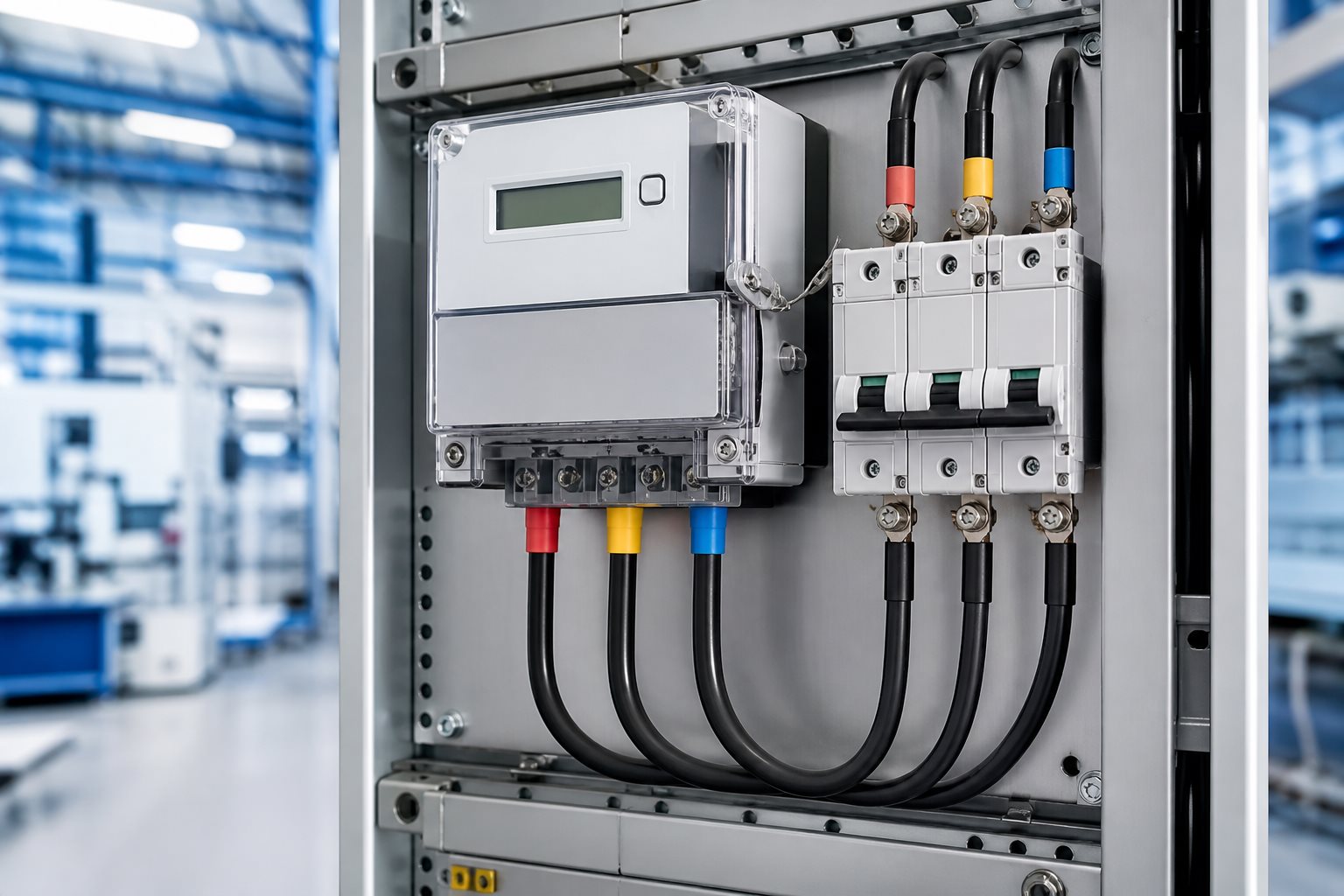
A three-phase meter measures the energy flowing through all three phases at once and shows a single total. It looks like a wider version of a home meter and is usually mounted in a distribution panel. Modern three-phase meters are electronic, often with an LCD display, and many support smart features such as remote reading, prepaid operation, and RS485 or MODBUS communication for building management systems.
Who Needs a Three-Phase Meter?
- Factories and workshops running CNC machines, compressors, and motors.
- Commercial buildings with lifts, large HVAC systems, and high lighting loads.
- Large homes with electric water heating, pools, or EV chargers.
- Solar farms and businesses exporting power to the grid through a net metering arrangement.
- Farmers and agribusinesses powering irrigation pumps and processing lines.
How to Choose the Right Three-Phase Meter
If you are buying a three-phase energy meter, check these points:
- Connection type: Direct connection for loads up to about 100 A; CT-operated (with current transformers) for larger loads.
- Accuracy class: Class 1 for general use; Class 0.5 or better for billing and industrial applications.
- Communication: RS485/MODBUS for building systems, or 4G/NB-IoT for remote reading.
- Features: Bidirectional measurement for solar, time-of-use tariffs, and prepaid mode if needed.
- Certification: IEC 62053 compliance and CE marking for international projects.
For a full walkthrough of meter types and technologies, see our energy meter types guide, or browse our three-phase meters and accessories.
Frequently Asked Questions
Can I install a three-phase meter myself?
No — three-phase connections involve high power and must be installed by a certified electrician and approved by your utility. The meter itself is usually supplied or approved by the utility, especially when it is used for billing.
How do I know if my building has three-phase power?
Check your main distribution panel: a three-phase supply typically has four incoming cables (three phases plus neutral) and a wider main breaker. Your utility bill or meter model also tells you — three-phase meters often display "3×230/400V" on the label.
Is three-phase electricity more expensive?
Three-phase can have a higher connection fee, but the electricity itself is often more efficient for heavy loads — motors run better, losses are lower, and you may qualify for industrial tariffs. For businesses with real power needs, it usually pays for itself.
Need a Three-Phase Meter for Your Project?
We supply direct and CT-operated three-phase meters with smart, prepaid, and solar options — certified to IEC 62053.
Request a Quote →